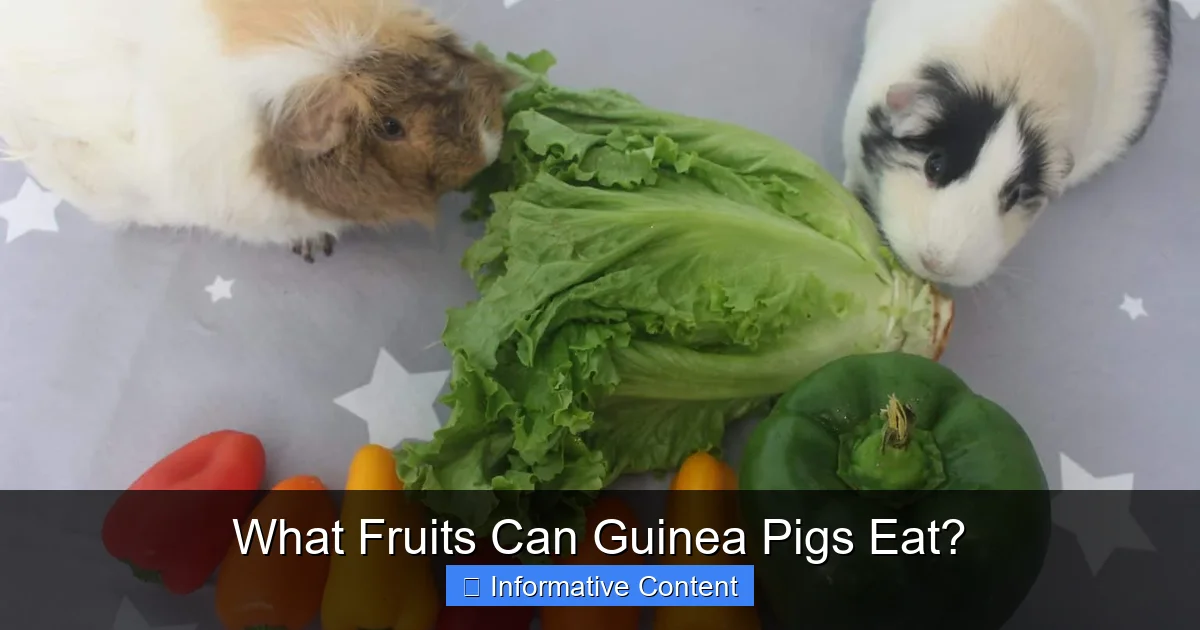
Feeding fruits to guinea pigs can be a delightful treat and a source of essential Vitamin C, but it’s crucial to know what fruits can guinea pigs eat and which ones to avoid. Always offer fruits in small, controlled portions due to their sugar content, and prioritize fresh, thoroughly washed options without seeds or pits. Introduce new fruits slowly and monitor your pet for any digestive upset to ensure their well-being.
Contents
- What Fruits Can Guinea Pigs Eat?
- Key Takeaways
- Quick Answers to Common Questions
- 📑 Table of Contents
- Why Fruits Are Good (in Moderation) for Guinea Pigs
- The Golden Rules for Feeding Fruits to Guinea Pigs
- Safe & Recommended Fruits for Guinea Pigs
- Fruits to Feed Sparingly
- Fruits to Absolutely AVOID
- Introducing New Fruits and Monitoring Your Guinea Pig
- Conclusion
- Frequently Asked Questions
What Fruits Can Guinea Pigs Eat?
Welcoming a guinea pig into your home means committing to their health and happiness, and a huge part of that is providing a proper, balanced diet. You’ve probably heard that hay, fresh vegetables, and guinea pig pellets form the cornerstone of their nutrition. But what about something a little sweeter? You might be wondering, “What fruits can guinea pigs eat?” It’s a great question, and understanding the answer is vital for keeping your little furry friend thriving.
Fruits can be a wonderful, vitamin-packed treat for your guinea pig, offering a burst of flavor and a natural source of important nutrients, especially Vitamin C, which guinea pigs cannot produce on their own. However, like any treat, moderation is absolutely key. Fruits are typically high in natural sugars, and too much sugar can lead to weight gain, digestive upset, and other health issues for these sensitive little herbivores. So, let’s dive into the delicious details and discover how to safely incorporate fruits into your guinea pig’s diet.
This comprehensive guide will walk you through everything you need to know about feeding fruits to your beloved guinea pig. We’ll cover the benefits, the strict rules for safe feeding, a detailed list of what fruits guinea pigs can eat, which ones to offer sparingly, and, most importantly, which ones to avoid entirely. By the end, you’ll feel confident making informed choices about the fruity snacks you offer, ensuring your guinea pig enjoys a varied, healthy, and happy life.
Key Takeaways
- Moderation is Key: Fruits should only be a small part of a guinea pig’s diet, typically 1-2 small servings a few times a week, due to their high sugar content.
- Vitamin C Source: Many safe fruits provide crucial Vitamin C, which guinea pigs cannot produce on their own and need to prevent scurvy.
- Always Remove Seeds and Pits: Seeds, pits, and cores from fruits like apples, peaches, and pears can contain cyanide and pose choking hazards.
- Prioritize Fresh and Washed: Always offer fresh, raw, and thoroughly washed fruits to remove pesticides and dirt. Avoid dried or canned fruits due to added sugars and preservatives.
- Introduce Slowly: When offering a new fruit, start with a tiny piece and monitor your guinea pig for any signs of digestive upset for 24-48 hours.
- Know What to Avoid: Certain fruits, like avocado, rhubarb, and citrus peels, are toxic or harmful and should never be given to guinea pigs.
- Observe Your Pet: Every guinea pig is unique. Pay attention to their preferences and how their digestive system reacts to different fruits.
Quick Answers to Common Questions
Can guinea pigs eat bananas?
Yes, guinea pigs can eat bananas, but only in very small, thin slices and very sparingly (once a week at most) due to their high sugar and potassium content.
How often can guinea pigs eat fruit?
Guinea pigs should only eat fruit 2-3 times a week, in very small portions, due to the high sugar content.
Do guinea pigs need fruit for Vitamin C?
While some fruits are good sources, guinea pigs can also get Vitamin C from leafy green vegetables and fortified pellets. Fruit is a good supplemental source but not the only one.
Can guinea pigs eat fruit skins?
For some fruits like apples or blueberries, the skin is safe if thoroughly washed. For others like kiwi or peaches, it’s best to remove the skin to avoid irritation.
What’s the best fruit for guinea pigs?
There isn’t a single “best” fruit, as variety is good. However, strawberries, blueberries, and seedless apples are popular and good sources of Vitamin C.
📑 Table of Contents
Why Fruits Are Good (in Moderation) for Guinea Pigs
Fruits aren’t just tasty; they can offer some significant nutritional benefits for your guinea pig when offered correctly. The most notable advantage is their Vitamin C content. Guinea pigs are one of the few animals, like humans, who cannot synthesize their own Vitamin C. This means they must get it from their diet. Without enough Vitamin C, guinea pigs can develop scurvy, a serious and potentially fatal condition characterized by lethargy, joint pain, rough coat, and dental problems.
The Power of Vitamin C
Many fruits are excellent sources of Vitamin C. For instance, bell peppers (often considered a vegetable, but botanically a fruit!) are incredibly high in it, as are strawberries, kiwi, and certain berries. Including small amounts of these Vitamin C-rich fruits can help ensure your guinea pig meets its daily requirements, supporting their immune system and overall health.
Hydration and Fiber
Most fruits have a high water content, which can contribute to your guinea pig’s hydration, especially during warmer weather. They also contain dietary fiber, which is essential for a healthy digestive system. Fiber helps keep their gut moving smoothly and prevents issues like constipation. However, it’s crucial to remember that hay should always be their primary source of fiber.
Natural Enrichment
Offering a variety of safe fruits can also provide mental enrichment for your guinea pig. The different textures, smells, and tastes can stimulate their senses and make mealtime more interesting. It’s a way to bond with your pet and ensure they enjoy their food beyond just meeting their basic needs.
The Downside: Sugar Content
Despite the benefits, the main reason for strict moderation is the sugar content in fruits. While natural, fruit sugars can still cause problems for guinea pigs if consumed in excess. Too much sugar can lead to:
- Obesity: Extra calories from sugar can quickly lead to weight gain.
- Digestive upset: Diarrhea or gas can occur if a guinea pig eats too much fruit, especially if their system isn’t used to it.
- Dental problems: While chewing fruits helps wear down teeth, the sugar can contribute to tooth decay in the long run.
This is why fruits should be seen as an occasional treat, not a dietary staple.
The Golden Rules for Feeding Fruits to Guinea Pigs
Before you even think about offering a juicy piece of fruit, it’s essential to understand the non-negotiable rules. These guidelines will help keep your guinea pig safe and healthy while enjoying their fruity snacks.
1. Moderation, Moderation, Moderation!
This cannot be stressed enough. Fruits should be a very small portion of your guinea pig’s diet – think of it as a dessert, not a main course. A good rule of thumb is to offer 1-2 small pieces of fruit, 2-3 times a week. The total amount shouldn’t be larger than a small grape or a nickel-sized piece for a single serving. Remember, their main diet should consist of unlimited hay, a daily portion of fresh vegetables, and a small amount of high-quality pellets.
2. Always Wash Thoroughly
Just like for humans, fruits can carry pesticides, waxes, and dirt. Always wash fruits thoroughly under cool running water before offering them to your guinea pig. Even if you’re peeling the fruit, it’s a good practice to wash it first.
3. Remove All Seeds, Pits, and Cores
This rule is critical. Many fruit seeds and pits (like those from apples, pears, peaches, and cherries) contain cyanide, which is toxic to guinea pigs. They also pose a choking hazard. Always remove them entirely. For fruits like berries with tiny seeds, these are generally fine as they are not a choking hazard and do not contain toxins in the same way larger pits do.
4. Offer Fresh and Raw Only
Stick to fresh, raw fruits. Avoid anything canned, dried, cooked, or processed. Canned fruits often contain added sugars and preservatives. Dried fruits are extremely concentrated in sugar, making them a poor choice. Cooked fruits lose some of their nutritional value and can have a different texture that might be unappealing or difficult for guinea pigs to digest.
5. Introduce New Fruits Slowly
When you introduce a new fruit into your guinea pig’s diet, start with a tiny piece. Observe your guinea pig for 24-48 hours for any signs of digestive upset, such as soft stools, diarrhea, or gas. If they show any adverse reactions, discontinue feeding that particular fruit. If all goes well, you can gradually increase the portion to the recommended small size.
6. Variety is Good, But Listen to Your Piggy
While offering a variety of fruits can provide a broader range of nutrients, some guinea pigs might have a preference or sensitivity to certain types. Pay attention to what your guinea pig enjoys and what agrees with their system.
Safe & Recommended Fruits for Guinea Pigs
Now for the exciting part! What fruits can guinea pigs eat safely and enjoy? Here’s a list of generally safe and beneficial options, along with tips on how to serve them.
Apples (Seedless)
Apples are a popular treat. They are rich in fiber and Vitamin C. Always remove the core and all seeds, as apple seeds contain cyanide. Offer a small, thin slice a couple of times a week. Red and green apples are both fine, but green apples tend to be tarter and less sugary.

Visual guide about What Fruits Can Guinea Pigs Eat?
Image source: smallpetselect.com
Strawberries
These juicy berries are packed with Vitamin C and antioxidants. They are a favorite for many guinea pigs. Offer a quarter or half of a medium-sized strawberry, 2-3 times a week. The tiny seeds are safe to eat.
Blueberries
Another excellent source of Vitamin C and antioxidants. Blueberries are small, so offer 2-3 berries at a time. They are a great little treat but remember their sugar content.
Raspberries
Similar to blueberries, raspberries are high in Vitamin C and fiber. Offer 1-2 raspberries, 2-3 times a week. They have a softer texture that some piggies really enjoy.
Melons (Cantaloupe, Watermelon, Honeydew)
Melons are high in water content, making them very hydrating. They also provide Vitamin C. Offer a small, seedless piece (about an inch square) a couple of times a week. For watermelon, the white rind is also edible and quite nutritious, but avoid the green outer skin.
Kiwi
Kiwi is a Vitamin C powerhouse! It’s also a good source of fiber. Peel the skin (though some guinea pigs can eat the fuzzy skin, it’s safer to remove it to avoid irritation) and offer a small slice, 1-2 times a week. The tiny black seeds are safe.
Pears (Seedless)
Pears offer fiber and Vitamin C. Similar to apples, always remove the core and seeds. Offer a small, thin slice, 1-2 times a week.
Peaches (Pitted)
Fresh peaches, when in season, can be a lovely treat. They contain Vitamin C and antioxidants. Always remove the large pit entirely, as it contains cyanide. Offer a small slice without the skin (the fuzzy skin can be irritating for some). 1-2 times a week is plenty.
Fruits to Feed Sparingly
Some fruits are safe for guinea pigs but should be offered even less frequently or in smaller amounts due to their specific properties, such as very high sugar content or acidity.
Oranges and Other Citrus (Smallest Amounts)
While extremely high in Vitamin C, citrus fruits like oranges, mandarins, and grapefruits are also very acidic. Too much acidity can cause mouth sores or digestive upset. Offer a tiny segment (no larger than a thumbnail) very rarely, perhaps once every week or two, and always remove the white pith and seeds.
Bananas
Bananas are very high in sugar and potassium. While not harmful in tiny amounts, excessive banana can lead to constipation or weight gain. Offer a very thin, small slice (less than a quarter-inch thick) only once a week at most, as a very special treat.
Grapes
Grapes are high in sugar. While not toxic to guinea pigs (unlike dogs), they should be given in very limited quantities. Offer half a grape, once a week at most. Always remove any seeds if present.
Mango
Mango is a very sweet fruit, rich in Vitamin C and Vitamin A. Due to its high sugar content, offer a tiny, peeled piece (about a half-inch cube) very sparingly, perhaps once every two weeks.
Fruits to Absolutely AVOID
This is perhaps the most important section. Some fruits are dangerous, toxic, or simply unsuitable for guinea pigs. Never offer these to your pet.
1. Avocado
Avocado is highly toxic to guinea pigs. It contains a fungicidal toxin called persin, which can cause serious health issues, including breathing difficulties and heart problems. Keep all parts of the avocado away from your guinea pig.
2. Rhubarb
Rhubarb leaves and stalks contain oxalic acid, which is toxic to guinea pigs and can cause kidney damage and other severe problems. Never feed rhubarb in any form.
3. Any Fruit with Large Pits/Seeds (without removal)
As mentioned, pits and seeds from fruits like cherries, apricots, plums, and peaches contain cyanide. While the flesh of some of these fruits might be acceptable in tiny, pitted amounts, the risk of accidental exposure to the pit material makes them generally not recommended. It’s best to stick to safer options.
4. Dried, Canned, or Cooked Fruits
These are a definite no-go. Dried fruits are concentrated sugar bombs. Canned fruits are often loaded with added sugars and preservatives. Cooked fruits lose nutrients and can alter digestive processes. Stick to fresh and raw.
5. Processed Fruit Products
This includes fruit juices, fruit snacks, fruit leather, or any human-grade processed fruit item. These are typically full of added sugars, artificial flavors, and preservatives that are incredibly harmful to guinea pigs.
Introducing New Fruits and Monitoring Your Guinea Pig
You’ve picked a safe fruit, washed it, and prepared it perfectly. Now what? Introducing new foods, even safe ones, requires a thoughtful approach.
Small Steps Are Best
Start with the smallest possible piece – really, just a crumb or a tiny sliver. Place it in their bowl or offer it by hand. Some guinea pigs are naturally adventurous eaters, while others might be more cautious. Don’t be discouraged if they don’t immediately dive in.
Observe and Learn
After offering a new fruit, keep a close eye on your guinea pig for the next 24-48 hours. Watch for any changes in their stool consistency (looking for diarrhea or excessively soft stools), reduced appetite, lethargy, or signs of discomfort like hunching or grinding teeth. If you notice any of these symptoms, stop feeding that particular fruit and consult your vet if symptoms persist.
Rotation and Variety
Once you know what fruits can guinea pigs eat and tolerate well, you can start to rotate them. Instead of giving the same fruit every time, offer a variety over the week. This ensures a broader spectrum of nutrients and keeps things interesting for your piggy. Remember, the goal is small, varied treats, not large, frequent servings.
Individual Preferences
Just like people, guinea pigs have individual preferences. Your guinea pig might absolutely adore strawberries but turn up their nose at a piece of kiwi. That’s perfectly normal! Don’t force them to eat something they don’t like. There are plenty of safe options to choose from.
Conclusion
Knowing what fruits can guinea pigs eat is an essential part of responsible guinea pig ownership. While fruits offer wonderful benefits like Vitamin C, hydration, and fiber, their high sugar content demands strict moderation. Always prioritize fresh, raw, thoroughly washed, and seed/pit-free options. Stick to a few small servings a week, introduce new fruits slowly, and never offer any of the toxic or harmful varieties.
By following these guidelines, you can safely offer your guinea pig a delightful range of fruity treats, enhancing their diet and providing enriching sensory experiences. Remember that fresh hay, a variety of safe vegetables, and quality pellets form the core of their diet. Fruits are the sweet bonus, given with love and careful consideration, helping your cherished companion live a long, healthy, and happy life. Enjoy sharing those special snack moments with your furry friend!
Frequently Asked Questions
Is dried fruit okay for guinea pigs?
No, dried fruit is not okay for guinea pigs. It is extremely concentrated in sugar and lacks the water content of fresh fruit, which can lead to digestive upset and obesity.
Can baby guinea pigs eat fruit?
Baby guinea pigs, especially those still nursing, should not be given fruit. Once weaned and introduced to a regular diet of hay and pellets, you can introduce tiny pieces of very safe fruits slowly, just like with adult guinea pigs.
How much fruit should I give my guinea pig?
A serving of fruit for a guinea pig should be very small, no larger than a small grape or a nickel-sized piece. This small portion should be offered only 2-3 times per week.
What if my guinea pig doesn’t like fruit?
It’s perfectly fine if your guinea pig doesn’t like fruit. Many guinea pigs thrive on a diet of hay, fresh vegetables, and pellets without any fruit. There are plenty of other ways to provide Vitamin C and enrichment.
Can guinea pigs eat frozen fruit?
No, guinea pigs should not eat frozen fruit. The extreme cold can be a shock to their digestive system, and it could also pose a choking hazard. Always offer fresh, room-temperature fruit.
Are organic fruits necessary for guinea pigs?
While organic fruits are not strictly necessary, they are a good choice if available, as they reduce pesticide exposure. If feeding non-organic fruits, always wash them thoroughly to remove any residues.