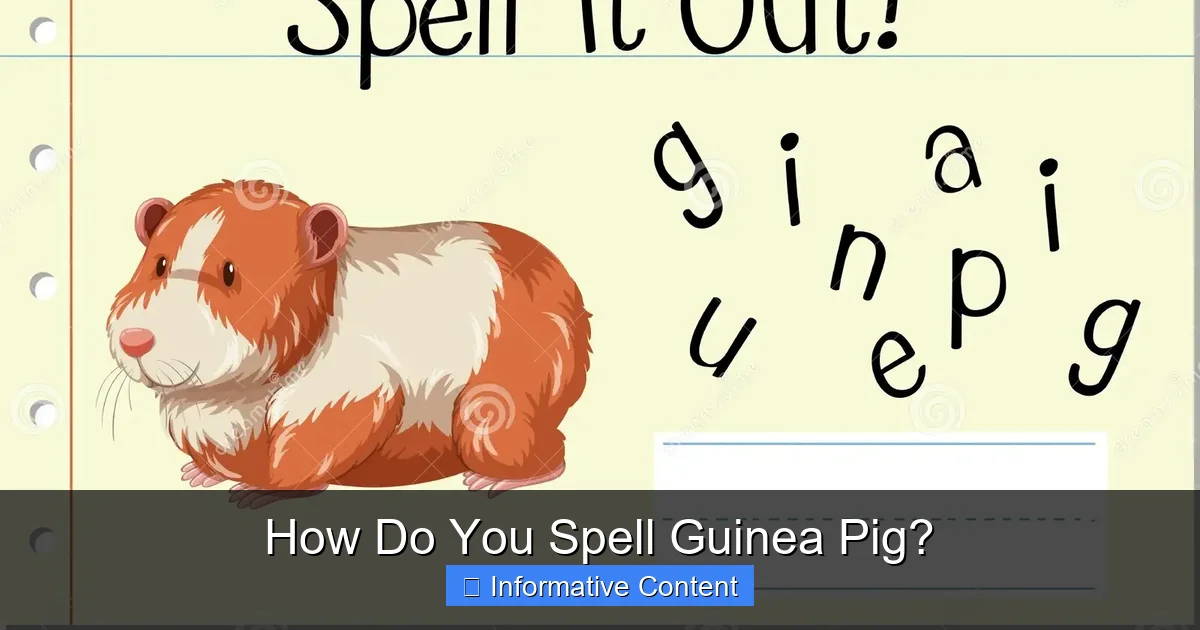
Learning how to spell “Guinea Pig” correctly is easier than you think, despite its unusual name. The proper spelling is G-U-I-N-E-A P-I-G, with “Guinea” referring to its historical journey or cost, and “Pig” describing its shape and sounds. This article breaks down the common misspellings and offers easy tips to remember the correct form every time.
Hello there, fellow word enthusiast and animal lover! Have you ever paused mid-sentence, perhaps while writing a cute caption for your pet’s photo or searching for information online, and thought, “Wait a minute… how *do* you spell Guinea Pig?” If so, you’re certainly not alone! It’s a remarkably common moment of hesitation, and for good reason. The name “Guinea Pig” is a bit quirky, a bit unusual, and definitely prone to misspellings.
But don’t you worry one bit! Today, we’re going to clear up all the confusion once and for all. This comprehensive guide will not only show you the definitive correct spelling of “Guinea Pig” but also dive into why it’s spelled that way, explore its fascinating origins, tackle common mistakes, and provide you with easy-to-remember tips. By the time you finish reading, you’ll be spelling “Guinea Pig” with absolute confidence and perhaps even impress your friends with some fun facts about these charming creatures. So, let’s embark on this journey to master the spelling of “Guinea Pig” together!
Contents
- Key Takeaways
- Quick Answers to Common Questions
- 📑 Table of Contents
- The Correct Spelling of “Guinea Pig” Revealed
- A Deep Dive into the Origins: Why “Guinea Pig”?
- Common Misspellings and How to Avoid Them
- Pronunciation Pointers for “Guinea Pig”
- More Than Just a Name: Fun Facts About Guinea Pigs
- Mastering the Spelling in Everyday Life
- Frequently Asked Questions
Key Takeaways
- Correct Spelling: The definitive spelling is “Guinea Pig.” It’s two words, with “Guinea” capitalized only at the beginning of a sentence or as part of a proper noun.
- Break It Down: “Guinea” is spelled G-U-I-N-E-A, and “Pig” is spelled P-I-G. Remembering these two distinct parts helps avoid common errors.
- Common Misspellings: Watch out for variations like “Guinee,” “Guiney,” “Pigg,” or attempts to combine them into one word (e.g., “Guineapig”).
- Origin Insights: The name “Guinea” likely refers to the price (a guinea coin) or its journey through Guinea, not its actual origin country. The “pig” part comes from its squealing sounds and stocky build.
- Pronunciation Aid: “Guinea” is pronounced GIN-ee, and “Pig” is pronounced as it looks. Practicing the pronunciation can reinforce the correct spelling.
- Memory Tips: Use mnemonic devices (like “Great Understanding Is Needed for Every Animal”) or visual associations to secure the spelling in your memory.
- Readability Boost: Understanding the spelling enhances your writing clarity and confidence when discussing these adorable rodents.
Quick Answers to Common Questions
How do you spell “Guinea Pig” correctly?
The correct spelling is G-U-I-N-E-A P-I-G.
Is “Guinea Pig” one word or two?
It is two separate words: Guinea Pig.
How is the “Guinea” part of “Guinea Pig” spelled?
The “Guinea” part is spelled G-U-I-N-E-A.
What is a common misspelling of “Guinea”?
A very common misspelling is “Guinee” instead of “Guinea.”
Does “Guinea Pig” refer to an actual pig?
No, a guinea pig is a rodent, not a pig. The “pig” part refers to its sounds and appearance.
📑 Table of Contents
The Correct Spelling of “Guinea Pig” Revealed
Let’s get straight to the point and clear up any lingering doubts: the correct spelling is Guinea Pig. That’s right, it’s two separate words, and “Guinea” is always capitalized when it’s the first word of a sentence or part of a proper noun, but generally lowercase when referring to the animal within a sentence (unless it’s part of a formal title). So, for example, “My guinea pig loves carrots,” but “The Guinea Pig Club did great work.”
Breaking Down the Word “Guinea”
The first part of the name, “Guinea,” is spelled G-U-I-N-E-A. This is where most of the confusion arises. People often try variations like “Guinee,” “Guiney,” “Guini,” or even “Ginnie.” However, the correct form follows the spelling of the West African region or the historical coin. Remembering “G-U-I-N-E-A” is key. Think of it like the country “Papua New Guinea” – same spelling for “Guinea.”
Understanding “Pig” in the Context
The second part, “Pig,” is much simpler. It’s spelled P-I-G, just like the farm animal. There’s usually less trouble with this part, though sometimes people might accidentally double the ‘g’ (pigg) out of habit for other words. Rest assured, it’s a single ‘g’. So, when you combine them, you get “Guinea Pig.” Simple, right? The challenge really lies in mastering “Guinea.”
Why the Confusion?
The unique nature of the name “Guinea Pig” contributes to its common misspellings. It doesn’t sound exactly as it’s spelled, especially the “Guinea” part, which is pronounced more like “GIN-ee.” This phonetic discrepancy can trick our brains into trying alternative spellings that seem to align better with the sound. Plus, it’s not an everyday word for many, so frequent exposure isn’t always there to reinforce the correct form. Many people also wonder how do you spell Guinea Pig because it’s a compound name with no clear connection to typical animal names.
A Deep Dive into the Origins: Why “Guinea Pig”?
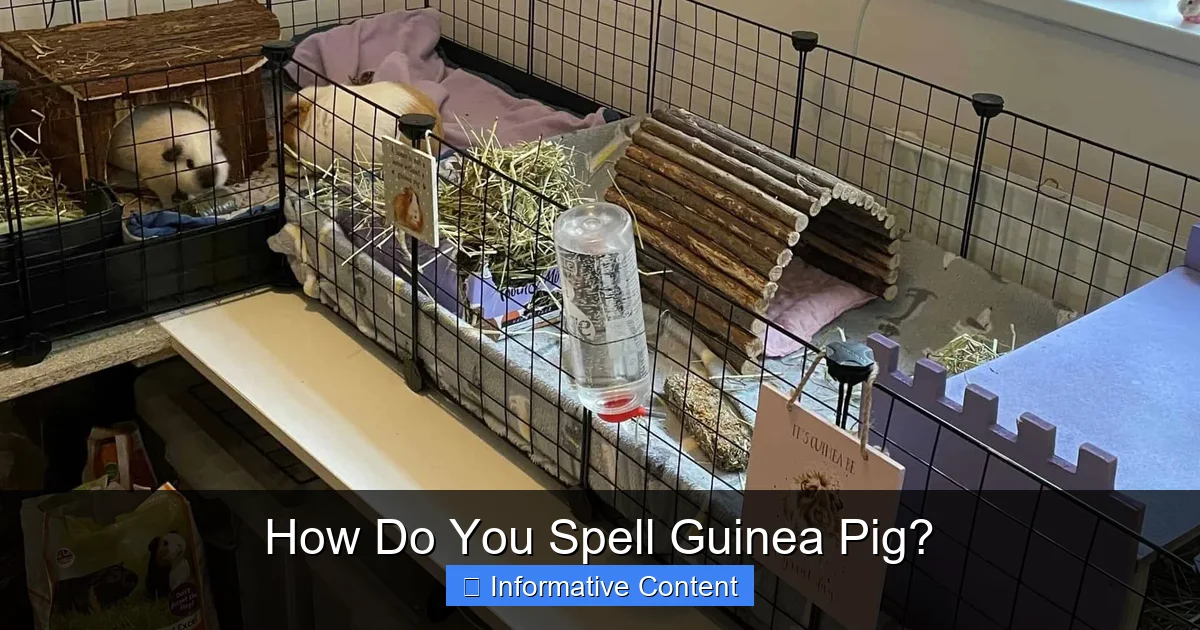
Visual guide about How Do You Spell Guinea Pig?
Image source: guineapigawarenessweek.com
Understanding the history behind the name “Guinea Pig” can actually be a fantastic way to remember its correct spelling. It’s a captivating story that dispels some common myths!
The “Guinea” Mystery: West Africa or Price?
Despite its name, the guinea pig is *not* from Guinea in West Africa, nor is it related to actual pigs. These adorable rodents are native to the Andes region of South America. So, why “Guinea”? There are a couple of popular theories:
- The “Guinea” as a Coin: One leading theory suggests that “guinea” referred to the price of the animal. A guinea was an old English gold coin, worth about 21 shillings, which was quite a sum back in the 16th century when these animals first arrived in Europe. This would mean they were quite valuable pets.
- The “Guinea” as a Journey: Another theory proposes that the animals were brought to Europe via ships that frequently stopped in Guinea (a region in West Africa) on their journey from South America. They might have been mistakenly thought to originate from there, or the name simply stuck because of the port of embarkation.
- The “Guiana” Connection: Less commonly, some suggest a corruption of “Guiana,” a region in South America where they originated, but this theory is less widely accepted.
Regardless of the exact reason, the spelling “Guinea” was established early on, linking it to the European context of its introduction rather than its true South American home.
The “Pig” Connection: Sound and Shape
Now, for the “pig” part. This connection is a bit more straightforward and amusing:
- Sound: Guinea pigs are known for their distinct vocalizations. They make a variety of noises, including squeals, grunts, and purrs, which early European observers might have likened to the sounds made by young pigs. Their characteristic “wheeking” sound is particularly pig-like to some ears.
- Shape: Their stocky build, short legs, and large heads can also resemble a small piglet. They’re often described as having a somewhat “piggy” appearance.
So, while they’re not biologically pigs, the name reflects an early, somewhat whimsical, human observation of their traits. Knowing this origin story helps solidify the two-word spelling: “Guinea” for the journey/price, and “Pig” for their sounds/shape.
Tracing Their Journey to Europe
Guinea pigs, or “cavies” as they are scientifically known (from their genus *Cavia*), were first domesticated by indigenous peoples in the Andes for food and cultural purposes thousands of years ago. Spanish conquistadors brought them to Europe in the 16th century, where they quickly gained popularity as exotic pets, especially among royalty and the wealthy. This rich history underscores how “How do you spell Guinea Pig?” has become a question spanning centuries of linguistic evolution.
Common Misspellings and How to Avoid Them
Even with the correct spelling now firmly in mind, it’s helpful to be aware of the common pitfalls. Recognizing these mistakes can help you correct yourself or others, further cementing your understanding of how do you spell Guinea Pig.
“Guinee” vs. “Guinea”
This is, without a doubt, the most frequent error. The temptation to spell it “Guinee” often comes from wanting to match the “ee” sound you hear. However, remember the actual spelling: G-U-I-N-E-A. A good trick here is to think of countries like “Guinea-Bissau” or “Papua New Guinea.” They all share the same “Guinea” spelling. If you think of it as a geographical name first, it helps.
“Pigg” vs. “Pig”
Occasionally, people might add an extra ‘g’ to “pig,” making it “pigg.” While not as common as the “Guinea” error, it’s worth noting. Just remember, it’s a simple, three-letter word: P-I-G. No extra ‘g’ needed!
Compound Word Mistakes
Another common mistake is trying to combine “Guinea” and “Pig” into a single word, like “Guineapig” or “Guineepig.” It’s crucial to remember that it is always two distinct words: “Guinea Pig.” This maintains the clarity and historical accuracy of the name. If you’re wondering how do you spell Guinea Pig as one word, the answer is: you don’t!
Practical Tips for Remembering the Spelling
Mastering how do you spell Guinea Pig isn’t just about knowing the letters; it’s about employing memory aids.
- Mnemonic Devices: A mnemonic is a memory aid. Try creating a sentence where each word starts with a letter from “Guinea.” For example: “Great Understanding Is Needed for Every Animal.” Or for the whole phrase: “Generous Ursula Invited Nine Enormous Antelopes, Playing In Grass.” Get creative! The sillier, the better, as silly things are often easier to remember.
- Breaking It Down: Always think of it as two separate words: “Guinea” and “Pig.” Tackle each part individually. Once you’ve got “Guinea” down, “Pig” is a breeze.
- Visual Association: If you’re a visual learner, try to picture the map of Africa and highlight the “Guinea” region, then imagine a little pig next to it. Or visualize a guinea coin. Connecting the word to an image can make it stick.
- Practice Writing It: The more you write “Guinea Pig” correctly, the more ingrained it will become. Write it out five times right now! See? It feels more natural already.
Pronunciation Pointers for “Guinea Pig”
Sometimes, knowing how to pronounce a word correctly can also help you remember its spelling, even if there are some phonetic differences. Let’s break down the pronunciation of “Guinea Pig.”
Syllable Breakdown
“Guinea” is typically pronounced with two syllables:
- Gin-ee (or GIN-ee, with the stress on the first syllable).
“Pig” is a single syllable word:
- Pig (as in the animal).
So, put together, it’s pronounced “GIN-ee Pig.”
Emphasizing the Correct Sounds
The key is to remember that the “gui” in “Guinea” sounds like “gin,” not “goo-ee” or “gwee.” The “nea” part sounds like “nee” or “ee.” Practicing this pronunciation aloud can reinforce the visual memory of the spelling. Don’t be shy; say it out loud a few times: “GIN-ee Pig!”
Practice Makes Perfect
If you’re ever unsure about how do you spell Guinea Pig, try saying it slowly, focusing on the “Gin-ee” part. This mental rehearsal can help solidify both the pronunciation and the spelling in your memory. Many people who ask how do you spell Guinea Pig are also seeking clarity on its spoken form.
More Than Just a Name: Fun Facts About Guinea Pigs
Now that you’re a spelling expert, let’s celebrate by learning a little more about these fascinating creatures. Knowing these fun facts can also serve as conversational pieces that subtly reinforce your mastery of “How do you spell Guinea Pig?”.
Not from Guinea, Not a Pig!
As we’ve discussed, they hail from South America, not Guinea, and are rodents, not porcine. Their scientific name, *Cavia porcellus*, is where the common informal term “cavy” comes from. “Porcellus” means “little pig” in Latin, nodding to those historical observations of their appearance and sounds.
Amazing Cavy Communication
Guinea pigs are highly vocal! They have a wide range of sounds, each with its own meaning:
- Wheeking: A loud, excited squeal, usually indicating hunger or excitement for food or attention.
- Purring: A low, rumbling sound that can signify contentment or, if short and choppy, irritation.
- Rumbling: Often a mating call, usually by males.
- Chutting/Whining: Sounds of general contentment while exploring or being petted.
- Squealing/Shrieking: Indicates pain, fear, or extreme distress.
Their complex communication adds to their charm and makes them delightful companions.
Popularity as Pets
Guinea pigs are beloved pets worldwide. They are generally docile, friendly, and relatively easy to care for, making them excellent choices for families. They love to interact with their owners and other guinea pigs, thriving in social environments.
Their Role in History and Culture
Beyond being pets, guinea pigs have played significant roles. They were, and still are, a traditional food source in their native Andes. They were also historically used in scientific research, which is why the phrase “guinea pig” is also an idiom meaning a subject of an experiment or test. This double meaning makes understanding how do you spell Guinea Pig even more crucial for clarity.
Mastering the Spelling in Everyday Life
Having a firm grasp on how do you spell Guinea Pig correctly isn’t just for tests; it has practical applications in daily life, enhancing your communication and demonstrating attention to detail.
When to Use the Term “Guinea Pig”
You’ll encounter the term “Guinea Pig” in various contexts:
- Pet Ownership: When discussing your own furry friend or advising others on pet care.
- Writing: In articles, stories, emails, or social media posts about animals.
- Education: In classroom settings, nature documentaries, or science projects.
- Figurative Language: When using the idiom “to be a guinea pig,” meaning to be subjected to an experiment or test. For example, “I was a guinea pig for my friend’s new recipe.” In this case, capitalization follows standard sentence rules.
In all these scenarios, correctly spelling “Guinea Pig” ensures your message is clear and professional.
Teaching Children the Correct Spelling
If you have children who are learning to read and write, or who love guinea pigs, teaching them the correct spelling can be a fun activity.
- Start by breaking it down: “Let’s learn ‘Guinea’ first! G-U-I-N-E-A. And then ‘Pig’! P-I-G.”
- Use the mnemonic devices we discussed earlier.
- Show them pictures of the Guinea region on a map, or draw a “piggy” looking guinea pig to link the visual to the word.
- Read books about guinea pigs together, pointing out the spelling whenever you see it.
Making it an interactive and memorable experience will help them master “How do you spell Guinea Pig?” quickly.
The Importance of Accuracy
In an age where information is constantly shared online, accuracy in spelling is more important than ever. Correct spelling reflects positively on your communication skills and ensures that your message is understood as intended. Imagine searching for “Guinee Pig” online; you might miss out on valuable information because of a simple misspelling. So, taking the time to learn how do you spell Guinea Pig correctly is a small but significant step towards better communication.
And there you have it! The journey from wondering “how do you spell Guinea Pig?” to confidently knowing the answer is complete. You’ve learned that it’s G-U-I-N-E-A P-I-G, two distinct words, and explored the fascinating history behind its name. You’re now equipped with memory tips, pronunciation guides, and a deeper appreciation for these charming cavies.
So, next time you come across a picture of a fluffy guinea pig or need to write about them, you can do so with unwavering confidence. No more hesitation, no more second-guessing! Just clear, correct, and confident spelling. Keep practicing, keep learning, and enjoy sharing your newfound knowledge about the wonderful world of “Guinea Pigs”!
Frequently Asked Questions
What is the origin of the “Guinea” in “Guinea Pig”?
The “Guinea” in Guinea Pig likely refers either to the cost of the animal (a “guinea” coin) when they were first brought to Europe, or to the route ships took, stopping in the region of Guinea in West Africa on their way from South America. They are not actually from Guinea.
Are guinea pigs really from Guinea?
No, guinea pigs are native to the Andes region of South America. The “Guinea” in their name is a historical artifact related to their introduction to Europe, not their geographical origin.
What are some other names for a guinea pig?
Scientifically, guinea pigs belong to the genus *Cavia*, so they are often informally called “cavies.” In some regions, they might have specific local names, but “guinea pig” and “cavy” are the most widespread English terms.
Why are guinea pigs called “pigs”?
They are called “pigs” due to their stocky body shape, large heads, and the various pig-like grunting, squealing, and wheeking sounds they make. Biologically, they are rodents, not pigs.
How can I remember how to spell “Guinea Pig”?
A great way to remember is to break it down into two parts: “Guinea” (G-U-I-N-E-A) and “Pig” (P-I-G). You can also use mnemonic devices, such as “Great Understanding Is Needed for Every Animal” to help remember “Guinea.”
What’s the difference between “Guinea Pig” and “Guineapig”?
The difference is that “Guinea Pig” is the correct spelling, always written as two separate words. “Guineapig” (as one word) is a common misspelling and incorrect.