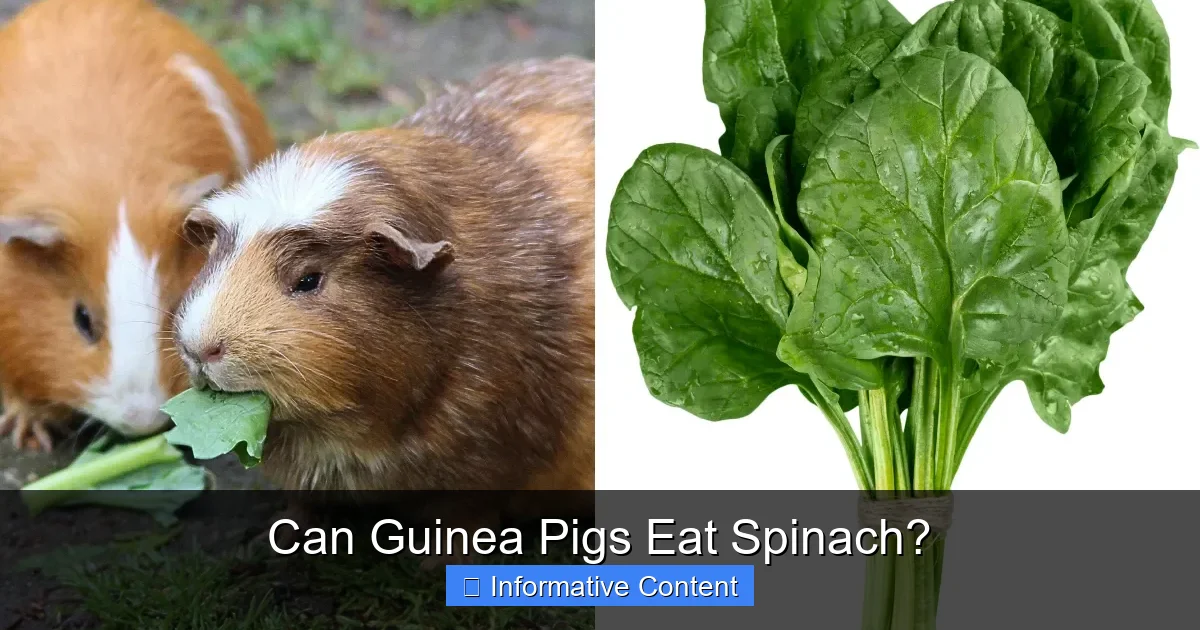
Yes, guinea pigs can eat spinach, but only in moderation. While spinach offers beneficial vitamins like C, A, and K, it’s also high in oxalates and calcium, which can lead to urinary issues if overfed. Introduce small amounts infrequently as part of a varied diet, always prioritizing hay and a wide range of safe vegetables to ensure your piggy’s health and happiness.
Contents
- Can Guinea Pigs Eat Spinach?
- Key Takeaways
- Quick Answers to Common Questions
- 📑 Table of Contents
- The Nutritional Profile of Spinach for Guinea Pigs
- Can Guinea Pigs Eat Spinach? The Short Answer and The Nuance
- How Much Spinach Can Guinea Pigs Eat? Safe Portions and Frequency
- Introducing Spinach to Your Guinea Pig’s Diet
- What Other Greens Are Good for Guinea Pigs? A Balanced Diet
- When to Avoid Spinach or Consult a Vet
- Conclusion
- Frequently Asked Questions
- Is cooked spinach safe for guinea pigs?
- Are all types of spinach safe for guinea pigs?
- What if my guinea pig doesn’t like spinach?
- Can spinach cause diarrhea in guinea pigs?
- How does spinach compare to other greens like kale or parsley for guinea pigs?
- Should I remove the stems from spinach before feeding?
Can Guinea Pigs Eat Spinach?
As a loving guinea pig owner, you’re always on the lookout for ways to enrich your furry friend’s diet. You want to provide them with the best possible nutrition, often wondering which human foods are safe and beneficial. It’s only natural to gaze at that fresh bunch of spinach in your fridge and ponder, “Can guinea pigs eat spinach?” This is a common and excellent question, as knowing what’s safe and what’s not is paramount to your pet’s health.
The short answer is yes, guinea pigs *can* eat spinach, but with a significant caveat: it must be given in very strict moderation. Like many good things in life, too much of it can be harmful. While spinach boasts an impressive nutritional profile, packed with vitamins and minerals beneficial for your piggy, it also contains certain compounds that can pose health risks if overconsumed. Understanding the balance between its benefits and its potential drawbacks is key to safely incorporating spinach into your guinea pig’s diet.
This article will dive deep into the world of spinach and guinea pigs. We’ll explore the nutritional good, the potential bad, how much is safe to feed, how often, and what to look out for. Our goal is to equip you with all the knowledge you need to make informed decisions about your guinea pig’s diet, ensuring they remain happy, healthy, and full of life. So, let’s explore whether spinach is a friend or foe to your adorable little companion!
Key Takeaways
- Moderation is Crucial: Guinea pigs can eat spinach, but only in very small quantities and infrequently due to its high oxalate and calcium content.
- Nutritional Benefits: Spinach provides excellent sources of Vitamin C, Vitamin A, Vitamin K, and Folate, all vital for a guinea pig’s health.
- Potential Risks: Overfeeding spinach can lead to the formation of calcium oxalate stones in the urinary tract, causing pain and serious health problems.
- Safe Serving Size: Offer no more than one small, fresh spinach leaf, one to two times per week at most, as part of a diverse diet.
- Observe Your Pet: Always monitor your guinea pig for any signs of digestive upset or unusual behavior after introducing new foods, including spinach.
- Prioritize Hay and Variety: A guinea pig’s diet should primarily consist of high-quality hay, supplemented daily with fresh leafy greens and bell peppers, and only occasional treats like spinach.
- Consult Your Vet: If your guinea pig has a history of urinary issues or you’re unsure about dietary changes, always speak to a veterinarian experienced with small animals.
Quick Answers to Common Questions
Can guinea pigs eat spinach daily?
No, guinea pigs should not eat spinach daily. It should be offered only once or twice a week at most due to its high oxalate and calcium content, which can lead to urinary issues if consumed too frequently.
What happens if a guinea pig eats too much spinach?
If a guinea pig eats too much spinach, the high oxalate and calcium content can lead to the formation of painful calcium oxalate stones in their urinary tract, potentially causing blockages or infections requiring veterinary intervention.
Is spinach good for guinea pigs with Vitamin C deficiency?
While spinach contains Vitamin C, it’s not the best primary source for treating a deficiency due to its oxalate levels. Bell peppers and specific Vitamin C supplements are safer and more effective for this purpose.
Can baby guinea pigs eat spinach?
It’s generally recommended to avoid feeding spinach to baby guinea pigs. Their digestive systems are more sensitive, and it’s best to stick to unlimited hay and a carefully introduced range of common safe greens until they are older.
What part of spinach can guinea pigs eat?
Guinea pigs can eat the leafy green part of the spinach. Ensure it’s fresh and thoroughly washed. Avoid feeding stems, roots, or any parts that appear wilted or spoiled.
📑 Table of Contents
- The Nutritional Profile of Spinach for Guinea Pigs
- Can Guinea Pigs Eat Spinach? The Short Answer and The Nuance
- How Much Spinach Can Guinea Pigs Eat? Safe Portions and Frequency
- Introducing Spinach to Your Guinea Pig’s Diet
- What Other Greens Are Good for Guinea Pigs? A Balanced Diet
- When to Avoid Spinach or Consult a Vet
- Conclusion
The Nutritional Profile of Spinach for Guinea Pigs
Spinach is celebrated as a “superfood” for humans, and it’s easy to see why. It’s dense with a wide array of vitamins and minerals. For guinea pigs, many of these nutrients are indeed beneficial, but some components require careful consideration.
Beneficial Nutrients in Spinach
Let’s look at the good stuff that makes spinach a potentially healthy, albeit occasional, treat for your guinea pig:
- Vitamin C: This is perhaps the most critical nutrient for guinea pigs, as they, like humans, cannot synthesize their own Vitamin C. A deficiency can lead to scurvy, a debilitating and potentially fatal condition. Spinach contains a decent amount of Vitamin C, helping to boost their immune system and maintain overall health.
- Vitamin A: Important for good vision, immune function, and healthy skin and coat. Spinach is rich in beta-carotene, which converts to Vitamin A in the body.
- Vitamin K: Essential for blood clotting and bone health. Spinach is an excellent source of this vitamin.
- Folate (Vitamin B9): Crucial for cell growth and metabolism, supporting various bodily functions.
- Fiber: Like most leafy greens, spinach provides dietary fiber, which is vital for a guinea pig’s digestive health, promoting regular bowel movements and preventing gastrointestinal stasis.
- Antioxidants: Spinach contains various antioxidants that help protect cells from damage caused by free radicals, contributing to overall health and disease prevention.
Potential Concerns: Oxalates and Calcium
While the benefits are clear, it’s the high levels of two particular components in spinach that necessitate strict moderation when feeding it to guinea pigs:
- Oxalates (Oxalic Acid): Spinach is notoriously high in oxalates. When consumed, oxalates bind with calcium in the body to form calcium oxalate crystals. While harmless in small amounts, large quantities of these crystals can accumulate in the urinary tract, leading to the formation of painful and dangerous urinary stones or bladder sludge. Guinea pigs are particularly prone to these issues.
- Calcium: Spinach also contains a relatively high amount of calcium. While calcium is essential for strong bones and teeth, excess calcium, especially when combined with high oxalates, can exacerbate the risk of urinary stones. Guinea pigs process calcium differently than many other animals, excreting excess through their urine, making them more susceptible to stone formation.
So, while spinach offers a wealth of valuable nutrients, its oxalate and calcium content are the reasons why feeding spinach to guinea pigs must be done with extreme care and moderation.
Can Guinea Pigs Eat Spinach? The Short Answer and The Nuance
We’ve established that yes, guinea pigs can eat spinach, but it’s not a free-for-all veggie. The key word here is “moderation.” Imagine spinach as a tiny treat rather than a daily staple in their diet.
Moderation is Key
Think of spinach as a special snack, not a main meal. A guinea pig’s primary diet should be unlimited amounts of high-quality hay, supplemented with fresh, safe leafy greens and a small amount of pellets daily. Spinach falls into the “occasional treat” category because of the concerns we discussed earlier. A small portion, given infrequently, allows your guinea pig to reap some of its nutritional benefits without risking the negative effects of oxalates and excess calcium.

Visual guide about Can Guinea Pigs Eat Spinach?
Image source: guineapig101.com
It’s all about balancing the good with the potential bad. By controlling the portion size and how often you offer it, you significantly reduce the risk of health problems. Remember, variety is the spice of life for guinea pigs, and a varied diet helps ensure they get a broad spectrum of nutrients without over-consuming any single problematic compound.
Understanding Oxalates: How They Affect Guinea Pigs
Let’s delve a bit deeper into oxalates, as they are the primary reason for caution when considering spinach for guinea pigs. When guinea pigs consume foods high in oxalates, these compounds bind with dietary calcium. In high concentrations, this binding forms insoluble calcium oxalate crystals. These crystals can irritate the urinary tract and, over time, clump together to form stones in the bladder or kidneys. These stones are incredibly painful and can lead to serious conditions like urinary tract infections, blockages, and kidney damage, often requiring costly and invasive surgery.
Because guinea pigs are naturally predisposed to forming urinary stones due to their calcium metabolism, it’s crucial to be mindful of oxalate-rich foods. While a tiny amount of spinach won’t likely cause immediate harm, consistent or excessive feeding significantly increases this risk. This is why a balanced diet with a wide variety of low-oxalate greens is always recommended over relying heavily on any single vegetable, especially one high in oxalates like spinach.
How Much Spinach Can Guinea Pigs Eat? Safe Portions and Frequency
So, you’ve decided to offer your guinea pig a tiny bit of spinach. Now for the practical part: how much is safe, and how often can they have it? Precision here is important for your piggy’s health.
Recommended Serving Size
When it comes to spinach, less is definitely more. A safe portion size for an adult guinea pig is very small. We’re talking about:
- One small leaf of fresh spinach. This is roughly the size of your thumbnail or slightly larger. Avoid giving larger, mature leaves, as these tend to have higher concentrations of oxalates.
It’s crucial not to guess or eyeball this. If you have very large spinach leaves, tear off just a small piece. The goal is to provide a mere taste, a novel texture, and a tiny boost of certain vitamins, not to make it a substantial part of their meal.
Frequency of Feeding
Just as important as the portion size is the frequency. Spinach should not be a daily offering. To minimize the risks associated with oxalates and calcium, aim for:
- No more than once or twice a week. This infrequent offering allows your guinea pig’s system to process the oxalates and calcium without them building up to dangerous levels. Spacing out servings significantly reduces the cumulative effect.
Think of it this way: if you offer spinach on Monday, wait until at least Friday or the next week before offering it again. This helps maintain a safe dietary balance. Always ensure spinach is part of a diverse diet that includes a wide array of other safe, low-oxalate greens and vegetables.
Preparation Tips
Proper preparation is simple but important:
- Wash Thoroughly: Always wash the spinach leaf under cool, running water to remove any dirt, pesticides, or other contaminants.
- Dry Completely: Gently pat the leaf dry or let it air dry. Excess water can sometimes cause digestive upset in guinea pigs.
- Tear if Necessary: If the leaf is large, tear off a small, manageable piece. This also makes it easier for your piggy to nibble on.
- Serve Fresh: Always offer fresh, crisp spinach. Avoid wilted, yellowing, or spoiled leaves, as these can contain harmful bacteria or simply lack nutritional value.
By following these guidelines, you can safely allow your guinea pig to enjoy a tiny taste of spinach without undue worry.
Introducing Spinach to Your Guinea Pig’s Diet
When introducing any new food to your guinea pig, a cautious approach is always best. This holds true for spinach, even given its strict moderation guidelines. Guinea pigs have sensitive digestive systems, and sudden changes can lead to upset.
Start Slow and Observe
The first time you offer spinach, give an even smaller piece than the recommended one small leaf – perhaps half of a small leaf. This allows you to gauge how your guinea pig reacts to it. Guinea pigs can sometimes be picky, so they might not even be interested, and that’s perfectly fine!
After offering the tiny piece of spinach, wait 24-48 hours. During this period, carefully observe your guinea pig for any signs of digestive distress or unusual behavior. This is crucial for their well-being.
Observe Your Piggy Closely
What should you be looking for? Keep an eye out for these potential signs that spinach might not agree with your guinea pig:
- Diarrhea or Loose Stools: This is a common sign of digestive upset. Their poop should be firm and uniform.
- Reduced Appetite: If your guinea pig stops eating their hay or regular food, it could indicate discomfort.
- Lethargy or Hiding: A sudden decrease in activity or unusual hiding could mean they are feeling unwell.
- Bloating or Discomfort: If their belly appears distended or they seem uncomfortable when touched, this is a red flag.
- Changes in Urination: While less likely after a single small serving, any straining to urinate, frequent urination, or bloody urine is a serious sign and requires immediate veterinary attention.
If you notice any of these symptoms, immediately stop feeding spinach (and any other new foods) and contact your veterinarian. It’s always better to be safe than sorry when it comes to your pet’s health. If your guinea pig shows no adverse reactions after the initial small serving, you can proceed with the recommended portion and frequency.
Always Offer Fresh and Quality Spinach
Just like you would for yourself, always ensure the spinach you offer your guinea pig is fresh, clean, and free from any signs of spoilage. Avoid spinach that is wilted, yellowing, slimy, or has any mold. High-quality, fresh produce ensures maximum nutritional benefit and minimizes the risk of introducing harmful bacteria. Organic spinach can be a good choice to reduce pesticide exposure, but a thorough washing of conventional spinach is usually sufficient.
What Other Greens Are Good for Guinea Pigs? A Balanced Diet
While spinach can be a tiny part of their diet, a healthy guinea pig diet relies on variety and specific staple foods. Understanding what else to feed them will ensure they get all the necessary nutrients safely.
Daily Staples: The Foundation of Their Diet
The majority of your guinea pig’s fresh vegetable intake should come from safe, low-oxalate greens that can be offered daily or several times a week. These form the backbone of their fresh food diet:
- Green Leaf Lettuce: Excellent for daily feeding, low in calcium and oxalates.
- Red Leaf Lettuce: Similar to green leaf, a great staple.
- Romaine Lettuce: Another good daily choice, providing crunch and nutrients.
- Bell Peppers (especially red, yellow, orange): Crucial for Vitamin C. Guinea pigs *love* bell peppers, and they are excellent for daily feeding due to their high Vitamin C content and low calcium/oxalate levels.
- Cilantro: Aromatic and generally well-loved, can be offered several times a week.
- Parsley: Similar to cilantro, but slightly higher in calcium, so offer in moderation (a few sprigs a few times a week).
- Cucumber: A refreshing treat, mostly water, can be offered daily in small amounts.
Occasional Treats: Variety and Enrichment
Beyond the daily staples, you can offer a wider variety of vegetables and fruits as occasional treats, similar to how you would offer spinach. These add enrichment, different textures, and a broader spectrum of nutrients:
- Carrots: High in sugar and Vitamin A, so offer sparingly (a small coin-sized slice once or twice a week).
- Tomatoes: The fruit part is fine, but *never* the leaves or stem, which are toxic. Offer a small slice once a week.
- Apples: Small wedge, without seeds, once or twice a week. High in sugar.
- Strawberries: A small piece, once a week. High in sugar.
- Zucchini: Can be offered a few times a week.
Always introduce new foods slowly and observe your guinea pig for any reactions. Remember, fruits are high in sugar, so they should always be given as very infrequent, tiny treats.
Hay is Paramount: The Most Important Food
It cannot be stressed enough: unlimited, high-quality timothy hay (or orchard grass, oat hay) is the absolute foundation of a guinea pig’s diet. Hay provides essential fiber for their digestive system, wears down their continuously growing teeth, and keeps them healthy. About 80% of their diet should be hay. Fresh hay should be available to them 24/7.
By focusing on unlimited hay, a generous portion of daily safe greens like various lettuces and bell peppers, and only occasional, tiny treats like spinach, you ensure your guinea pig receives a balanced, healthy, and safe diet.
When to Avoid Spinach or Consult a Vet
While we’ve discussed general guidelines for feeding spinach to guinea pigs, there are specific situations where you should completely avoid it or seek veterinary advice. These precautions are vital for your pet’s long-term health.
Pre-existing Conditions
If your guinea pig has a history of certain health issues, particularly those related to the urinary system, spinach should be completely off-limits. These conditions include:
- Urinary Stones or Bladder Sludge: If your guinea pig has ever been diagnosed with or treated for calcium oxalate stones, bladder sludge, or any other urinary tract disease, avoid spinach entirely. The risk of recurrence is too high, and even a tiny amount could trigger a new problem.
- Kidney Disease: Guinea pigs with compromised kidney function may struggle to process excess calcium and oxalates. In such cases, a diet very low in both is often recommended, making spinach an unsuitable food.
- Digestive Sensitivities: Some guinea pigs simply have more sensitive digestive systems than others. If your piggy frequently experiences loose stools, gas, or other GI upset, it’s best to avoid introducing foods that might be even slightly challenging to digest.
If you are unsure whether your guinea pig’s health history makes spinach unsafe, always consult your veterinarian first.
Signs of Digestive Upset or Illness
As mentioned earlier, always observe your guinea pig closely after introducing any new food. If you notice any of the following signs, stop feeding spinach immediately and consider contacting your vet:
- Persistent Diarrhea or Very Soft Stools: While a single loose stool might not be alarming, ongoing diarrhea is serious.
- Loss of Appetite or Refusal to Eat: Anorexia in guinea pigs is an emergency, as their digestive system needs to be constantly moving.
- Lethargy, Weakness, or Hunching: These can indicate pain or general illness.
- Bloating or Painful Abdomen: A distended belly or flinching when touched can signal gastrointestinal issues.
- Straining to Urinate, Bloody Urine, or Painful Urination: These are urgent signs of potential urinary tract problems and require immediate veterinary attention. Even if you’ve only fed a tiny amount of spinach, if these symptoms appear, do not delay seeing a vet.
It’s always better to err on the side of caution. Your guinea pig’s health is paramount, and if you have any doubts about a food item or your pet’s well-being, a quick call or visit to your vet can provide peace of mind and prevent serious complications.
Conclusion
So, can guinea pigs eat spinach? The resounding answer is yes, they *can*, but it comes with a strong recommendation for extreme caution and strict moderation. Spinach is a fantastic source of Vitamin C, A, and K, among other beneficial nutrients, which are all vital for your guinea pig’s health. However, its relatively high oxalate and calcium content presents a real risk for urinary stone formation if overfed.
To safely incorporate spinach into your guinea pig’s diet, remember these key points: offer only one small, fresh leaf, no more than once or twice a week. Always wash it thoroughly and observe your pet closely for any signs of digestive upset. Spinach should never be a daily staple but rather a very occasional treat, complementing a primary diet of unlimited high-quality hay and a wide variety of safe, low-oxalate leafy greens and vegetables like various lettuces and bell peppers.
Your role as a guinea pig owner is to provide a balanced and safe diet that supports their overall health and prevents common ailments. By understanding the nuances of foods like spinach, you’re better equipped to make informed choices. When in doubt, always prioritize hay and common safe greens, and never hesitate to consult with your veterinarian. With careful attention to their diet, your guinea pig will thrive, happy and healthy for many years to come!
Frequently Asked Questions
Is cooked spinach safe for guinea pigs?
No, guinea pigs should only be fed raw, fresh spinach. Cooking spinach can alter its nutritional profile and texture, and it’s generally best to avoid feeding cooked vegetables to guinea pigs as their digestive systems are adapted to raw plant material.
Are all types of spinach safe for guinea pigs?
Yes, common varieties like baby spinach, curly spinach, and flat-leaf spinach are all generally safe in the recommended small, infrequent amounts. The primary concern is the oxalate and calcium content, which is present in all types of spinach.
What if my guinea pig doesn’t like spinach?
If your guinea pig doesn’t like spinach, there’s absolutely no need to worry! Guinea pigs can be picky eaters, and with the cautions around spinach, it’s perfectly fine if they don’t enjoy it. There are many other safe and beneficial greens they can enjoy.
Can spinach cause diarrhea in guinea pigs?
Yes, if fed in excessive amounts or if a guinea pig has a particularly sensitive digestive system, spinach can potentially cause digestive upset, including soft stools or diarrhea. Always introduce new foods slowly and observe your pet.
How does spinach compare to other greens like kale or parsley for guinea pigs?
Spinach is higher in oxalates than many other greens. Kale, while nutritious, is also high in calcium and should be fed in moderation, similar to spinach. Parsley is a good source of Vitamin C but has moderate calcium, so it’s safer than spinach but still best offered a few times a week, not daily.
Should I remove the stems from spinach before feeding?
While the stems of spinach are not toxic, they are tougher and contain higher concentrations of oxalates and fiber than the leaves. For this reason, it’s generally best to offer only the softer leaf portion of spinach and remove any thick stems, especially when feeding small amounts.