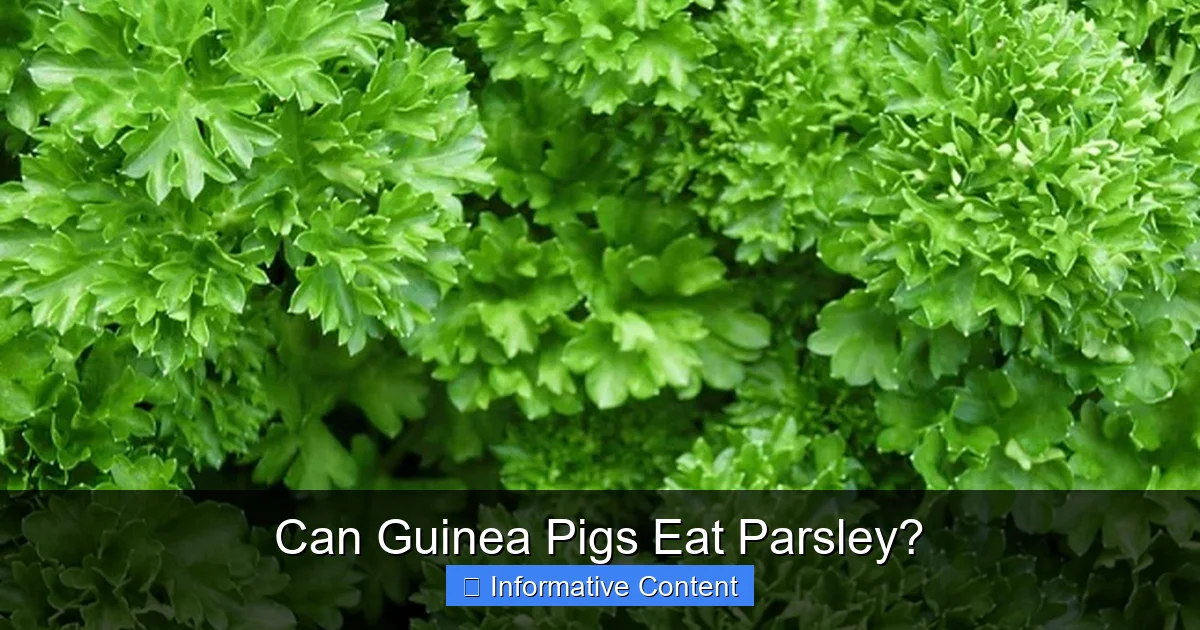
Yes, guinea pigs can eat parsley, but only in moderation. This flavorful herb is a good source of essential Vitamin C, which cavies critically need, along with beneficial vitamins and antioxidants. However, due to its relatively high calcium content, parsley should be offered as an occasional treat, typically a few times a week, to prevent potential urinary health issues like bladder stones. Always introduce new foods slowly and observe your pet.
Contents
- Can Guinea Pigs Eat Parsley?
- Key Takeaways
- Quick Answers to Common Questions
- 📑 Table of Contents
- The Green Light: Why Parsley Can Be Good for Guinea Pigs
- The Yellow Light: Important Considerations for Feeding Parsley
- How Much Parsley Can Guinea Pigs Eat? (The Goldilocks Principle)
- Preparing Parsley Safely for Your Piggies
- Parsley in Your Guinea Pig’s Overall Diet
- Conclusion
- Frequently Asked Questions
Can Guinea Pigs Eat Parsley?
Welcome, fellow guinea pig enthusiasts! If you’re anything like me, you’re always on a quest to provide the very best for your adorable cavies. That often means carefully considering what fresh treats and veggies you can safely add to their diet. Among the myriad of delicious greens available, parsley often pops up as a potential snack. But with so many things to consider, from nutritional content to potential risks, it’s only natural to wonder: can guinea pigs eat parsley?
The short answer is a resounding “yes!” Your guinea pigs can indeed enjoy parsley. However, like many good things in life, it comes with a few important caveats. Parsley, both the curly and flat-leaf varieties, can be a healthy and flavorful addition to your guinea pig’s diet when offered in proper moderation. It’s packed with beneficial nutrients that can contribute positively to your pet’s overall health. But, as with all fresh vegetables, understanding the “how much” and “how often” is absolutely essential to keep your furry friend thriving.
In this comprehensive guide, we’ll dive deep into everything you need to know about feeding parsley to your guinea pigs. We’ll explore its nutritional benefits, discuss the potential risks, provide clear guidelines on serving sizes and frequency, and even share tips on how to prepare it safely. By the end, you’ll feel confident in making informed decisions about including parsley as a treat for your beloved little piggies. So, let’s explore the world of parsley and guinea pigs together!
Key Takeaways
- Parsley is Safe in Moderation: Guinea pigs can safely eat both curly and flat-leaf parsley as an occasional treat.
- Excellent Source of Vitamin C: Parsley is rich in Vitamin C, which is crucial for guinea pigs as they cannot produce their own and require it to prevent scurvy.
- High Calcium Content: A significant consideration for parsley is its calcium level. Overfeeding can contribute to the formation of bladder stones or sludge in sensitive guinea pigs.
- Introduce Slowly and Observe: Always offer new foods like parsley in small amounts first and monitor your guinea pig for any signs of digestive upset or changes in stool.
- Wash Thoroughly: Always wash parsley (and all fresh produce) thoroughly under cool running water to remove pesticides, dirt, or other contaminants before feeding it to your pet.
- Part of a Varied Diet: Parsley should never be a primary food source. It should complement a diet primarily consisting of unlimited hay, high-quality pellets, and a wide variety of other safe fresh vegetables.
Quick Answers to Common Questions
Can guinea pigs eat curly parsley?
Yes, guinea pigs can eat curly parsley. Both curly and flat-leaf parsley are safe for guinea pigs in moderation.
How often can I give my guinea pig parsley?
You can give your guinea pig a small sprig or a few leaves of parsley about 2-3 times per week as part of their varied fresh vegetable intake.
Is parsley good for guinea pigs because of Vitamin C?
Yes, parsley is an excellent source of Vitamin C, which is crucial for guinea pigs as they cannot produce their own and need it to prevent scurvy.
Why should I be careful with the amount of parsley I feed my guinea pig?
You should be careful because parsley has a relatively high calcium content. Too much calcium can contribute to the formation of bladder stones or sludge in guinea pigs.
Do I need to wash parsley before giving it to my guinea pig?
Absolutely yes! Always thoroughly wash parsley under cool running water to remove dirt, pesticides, and other contaminants before offering it to your guinea pig.
📑 Table of Contents
The Green Light: Why Parsley Can Be Good for Guinea Pigs
Parsley isn’t just a pretty garnish for human food; it’s a nutrient powerhouse that can offer some significant health benefits to your guinea pigs. When given correctly, this aromatic herb can be a fantastic part of their varied fresh vegetable intake.
A Boost of Essential Vitamin C
Perhaps the most crucial benefit of parsley for guinea pigs is its high Vitamin C content. Guinea pigs, much like humans, cannot produce their own Vitamin C. This means they must obtain it through their diet. Without sufficient Vitamin C, guinea pigs can develop scurvy, a serious and potentially fatal condition. Symptoms of scurvy include lethargy, joint pain, rough coat, and difficulty moving. Offering fresh vegetables rich in Vitamin C, like parsley, is vital for their health. Just a small amount of parsley can contribute significantly to their daily Vitamin C needs, helping to keep them healthy and active.
Rich in Other Vitamins and Minerals
Beyond Vitamin C, parsley boasts an impressive nutritional profile. It contains Vitamin K, which is important for blood clotting and bone health. You’ll also find Vitamin A in parsley, essential for good vision, immune function, and healthy skin. Folate, a B vitamin crucial for cell growth and function, is also present. While these nutrients are important, their levels need to be balanced within the overall diet, especially considering other vegetables you might offer.
Antioxidants for Overall Health
Parsley is also rich in antioxidants, compounds that help protect cells from damage caused by free radicals. These antioxidants can contribute to a stronger immune system and overall well-being, helping your guinea pig fight off illness and maintain vitality. Think of antioxidants as little protectors for your guinea pig’s body, working behind the scenes to keep things running smoothly.
The Yellow Light: Important Considerations for Feeding Parsley

Visual guide about Can Guinea Pigs Eat Parsley?
Image source: guineapighq.com
While parsley offers many benefits, it’s not without its considerations. Understanding these potential drawbacks is key to feeding it responsibly and keeping your guinea pig healthy. The main concern revolves around certain compounds found in the herb.
Calcium Content and Urinary Health
This is arguably the most significant consideration when feeding parsley to guinea pigs. Parsley contains a relatively high amount of calcium compared to many other commonly fed vegetables. For guinea pigs, particularly those prone to urinary issues, excessive calcium intake can be a problem. When a guinea pig consumes too much calcium, their body may excrete the excess through their urine, which can lead to the formation of “sludge” or, more seriously, bladder stones (urolithiasis). These stones can be incredibly painful and often require veterinary intervention, including surgery. This is why moderation is absolutely critical when it comes to parsley and calcium-rich foods.
Oxalic Acid Levels
Parsley also contains oxalic acid, a compound found in many plants that can bind with minerals like calcium, potentially inhibiting their absorption or contributing to stone formation if consumed in very large quantities. While parsley has moderate levels of oxalic acid, it’s generally not a major concern when fed in small, occasional amounts as part of a varied diet. The primary concern remains the overall calcium content. Other greens like spinach also contain oxalic acid, which is why a diverse diet is always recommended.
Diuretic Properties
Some research suggests parsley has diuretic properties, meaning it can increase urine production. While this isn’t necessarily a bad thing, it’s another reason to offer it in moderation. Consistent overfeeding of diuretics might impact electrolyte balance, though this is less likely with occasional small servings.
Pesticides and Washing
Just like any produce you buy from the store, parsley can harbor pesticides, dirt, and bacteria. Feeding unwashed produce to your guinea pig can expose them to harmful chemicals and pathogens. Always, always thoroughly wash your parsley before offering it to your pets. This simple step is vital for their safety and health.
How Much Parsley Can Guinea Pigs Eat? (The Goldilocks Principle)
Finding the right balance is crucial when it comes to feeding parsley to your guinea pigs. It’s not a staple food, but rather a delicious and nutritious treat. Think of it as a flavorful supplement to their main diet.
A Small Treat, A Few Times a Week
The “Goldilocks principle” applies perfectly here: not too much, not too little, but just right. For most healthy adult guinea pigs, a small sprig or a few flat leaves of parsley (about the size of your thumb) a few times a week (2-3 times) is generally considered safe. This amount provides the benefits of Vitamin C and other nutrients without overwhelming their system with too much calcium.
Introduce New Foods Slowly
When you first introduce parsley to your guinea pig, start even smaller. Offer just a tiny piece, perhaps half a leaf, and observe your guinea pig for 24-48 hours. Look for any changes in their stool (soft, watery poop is a red flag) or behavior (lethargy, loss of appetite). If they show any signs of digestive upset, discontinue feeding parsley. If all goes well, you can gradually increase the amount to the recommended small sprig over a few weeks. This slow introduction method applies to all new foods you offer.
Part of a Varied Vegetable Medley
Remember, parsley should be part of a diverse array of fresh vegetables. Don’t rely solely on parsley for their Vitamin C needs or fresh greens. A good rule of thumb is to offer a mix of 3-5 different types of fresh vegetables daily, ensuring variety. This helps to balance nutrient intake and prevent overconsumption of any single nutrient (like calcium). For example, one day you might offer a small piece of bell pepper with a tiny bit of romaine lettuce, and the next, a small sprig of parsley with some cucumber.
Preparing Parsley Safely for Your Piggies
Proper preparation is just as important as knowing how much to feed. Following these simple steps will ensure your guinea pig enjoys their parsley safely.
Selecting Fresh Parsley
Always choose fresh, vibrant parsley. Look for bright green leaves without any yellowing, wilting, or dark spots. Avoid any bunches that look slimy or have a strong, unpleasant odor. Organic parsley is often preferred to minimize pesticide exposure, but thoroughly washing non-organic is also effective.
Washing is a Must
This step cannot be stressed enough. Before feeding parsley to your guinea pigs, wash it thoroughly under cool, running water. Gently rub the leaves to dislodge any dirt, debris, or potential pesticide residues. You can even soak it briefly in a bowl of cool water for a few minutes, then rinse again. Pat it dry with a paper towel or let it air dry before serving.
Chopping Size Matters
While guinea pigs are adept at nibbling, it’s always best to chop the parsley into small, manageable pieces. This helps prevent choking, especially for younger or older guinea pigs, and makes it easier for them to eat. You can also mix these small pieces in with their other daily vegetables.
Stems and Roots: Yay or Nay?
Generally, the leafy parts of parsley are preferred. While the stems are not toxic, they are tougher and can be fibrous. Most guinea pigs prefer the leaves. The roots are typically not fed to guinea pigs as they are even tougher and dirtier. Stick to the fresh, green leaves for the best experience for your pet.
Parsley in Your Guinea Pig’s Overall Diet
Understanding where parsley fits into the grand scheme of your guinea pig’s diet is crucial. It’s one piece of a much larger, balanced nutritional puzzle.
The Foundation: Hay, Pellets, and Water
Before we even talk about fresh vegetables, remember the absolute staples of a guinea pig’s diet:
- Unlimited, High-Quality Hay: This should make up about 80% of their diet. Timothy hay, orchard grass hay, or oat hay are excellent choices. Hay is vital for digestive health and wearing down their continuously growing teeth.
- High-Quality Pellets: A small amount of plain, timothy-based guinea pig pellets (without seeds or colorful bits) provides essential nutrients and prevents selective eating. Follow package directions for serving size based on your guinea pig’s age and weight.
- Fresh, Clean Water: Always available in a sipper bottle, changed daily.
These three items form the non-negotiable base of a healthy guinea pig diet. Fresh vegetables, including parsley, come next as a supplementary part of their daily intake.
Daily Veggie Variety is Key
Aim to provide about one cup of fresh, safe vegetables per guinea pig per day, split into two servings. This should be a diverse mix, not just one type. Rotating vegetables helps ensure a broad spectrum of nutrients and prevents overexposure to specific compounds (like calcium or oxalic acid) found in certain plants. Good daily veggie options include romaine lettuce, bell peppers (especially red, yellow, and orange for Vitamin C), cucumber, and small amounts of carrot.
When to Avoid Parsley or Be Extra Cautious
While most healthy guinea pigs can enjoy parsley in moderation, there are times when it’s best to be extra cautious or avoid it altogether:
- History of Bladder Stones: If your guinea pig has ever had bladder stones or sludge, it’s best to eliminate high-calcium foods like parsley from their diet entirely. Consult your vet for a tailored diet plan.
- Young or Pregnant Guinea Pigs: Young, growing guinea pigs and pregnant sows have higher calcium needs. However, even for them, moderation is key, and it should be balanced with other calcium-rich foods like alfalfa hay (for young pigs) or specialized pellets. Always consult your vet.
- Digestive Issues: If your guinea pig has a sensitive stomach or is currently experiencing digestive upset, hold off on new or strong-flavored foods like parsley until they are fully recovered.
Always pay attention to your guinea pig’s individual health and consult with an exotic vet if you have any concerns. They can provide personalized dietary advice.
Other Safe Greens to Rotate With Parsley
To maintain a varied and balanced diet, consider rotating parsley with these other safe and nutritious greens:
- Romaine Lettuce (avoid iceberg)
- Green Leaf Lettuce
- Red Leaf Lettuce
- Bell Peppers (all colors, especially for Vitamin C)
- Cucumber (in moderation)
- Cilantro
- Dandelion Greens (if pesticide-free)
- Small amounts of carrot tops
A diverse diet keeps things interesting for your guinea pig and ensures they receive a wide range of vitamins and minerals.
Conclusion
So, can guinea pigs eat parsley? Absolutely! This fragrant herb can be a delightful and healthy addition to your guinea pig’s diet, offering a valuable boost of essential Vitamin C, along with other beneficial vitamins and antioxidants. Just remember that the key to safe feeding is always moderation and a good understanding of its nutritional profile.
By offering small amounts of thoroughly washed parsley a few times a week, as part of a varied fresh vegetable diet, you can safely allow your cavies to enjoy its benefits. Always prioritize unlimited hay, high-quality pellets, and fresh water as the foundation of their diet. And, as with any dietary change or concern, never hesitate to consult with your exotic veterinarian. With careful attention to their nutritional needs, you’ll ensure your adorable guinea pigs lead a happy, healthy, and herb-filled life! Happy feeding!
Frequently Asked Questions
Is parsley a daily vegetable for guinea pigs?
No, parsley should not be a daily vegetable for guinea pigs. Due to its higher calcium content, it’s best offered as an occasional treat a few times a week rather than every day to prevent potential urinary issues.
Can young guinea pigs eat parsley?
Young guinea pigs can eat parsley, but it should be introduced in very small amounts and with caution. While they have higher calcium needs for growth, it’s still important to balance their diet and avoid overfeeding any single food.
What are the signs of too much calcium in a guinea pig’s diet?
Signs of too much calcium might include blood in the urine, painful urination, straining to urinate, or reduced appetite. If you notice these symptoms, consult an exotic vet immediately as they could indicate bladder stones or other urinary problems.
Can guinea pigs eat the stems of parsley?
While parsley stems are not toxic, they are tougher and more fibrous than the leaves. Most guinea pigs prefer the softer leaves, so it’s generally recommended to stick to the leafy parts for easier consumption and digestion.
What other vegetables are high in Vitamin C for guinea pigs?
Besides parsley, bell peppers (especially red, yellow, and orange) are excellent sources of Vitamin C for guinea pigs. Other good options include cilantro, dandelion greens, and small amounts of kiwi or strawberries as very occasional treats.
What should I do if my guinea pig doesn’t like parsley?
If your guinea pig doesn’t like parsley, don’t worry! There are many other safe and healthy vegetables they can enjoy. Simply offer a wider variety of other approved greens and veggies to ensure they get all the necessary nutrients.