
Guinea pigs often seem to sleep with their eyes open, a fascinating natural adaptation rooted in their survival instincts as prey animals. This behavior allows them to remain vigilant against potential threats even while resting, leading to short, fragmented sleep cycles throughout the day and night. Understanding these unique sleep habits helps owners create a secure and peaceful environment, crucial for their beloved cavy’s well-being.
Have you ever gazed at your adorable guinea pig, perhaps nestled in their bedding, perfectly still, only to notice their eyes are wide open? It’s a common and often puzzling sight for many guinea pig parents, leading to the intriguing question: “Do guinea pigs sleep with their eyes open?” This isn’t just a quirky habit; it’s a fascinating peek into their evolutionary history and how these beloved little creatures have adapted to survive in the wild.
For many pet owners, the idea of sleeping with your eyes open sounds impossible, maybe even a little creepy! But for guinea pigs, it’s a completely normal part of their daily routine. Understanding why they do this and how it impacts their sleep patterns can help us provide an even better, more secure environment for our small, furry friends. Let’s dive into the captivating world of guinea pig sleep and uncover the secrets behind those seemingly watchful eyes.
Contents
- Key Takeaways
- Quick Answers to Common Questions
- 📑 Table of Contents
- The Curious Case of Open-Eyed Sleep: Why Do They Do It?
- How Do We Know They’re Sleeping Then?
- Guinea Pig Sleep Cycles: Short and Sweet
- Creating a Sanctuary for Sleep: Tips for Owners
- When Open Eyes Might Mean Something Else
- Conclusion
- Frequently Asked Questions
Key Takeaways
- Natural Adaptation: Guinea pigs frequently sleep with their eyes open as an evolutionary defense mechanism, allowing them to stay alert for predators even when resting.
- Polyphasic Sleepers: Unlike humans, guinea pigs are polyphasic sleepers, meaning they take many short naps throughout a 24-hour period rather than one long stretch.
- Subtle Sleep Cues: While their eyes may be open, you can often spot a sleeping guinea pig by their relaxed posture, minimal movement, slow breathing, and occasional light twitching.
- Importance of Security: A sense of safety is paramount for guinea pigs to truly relax and achieve deeper stages of sleep, even if briefly.
- Environmental Factors: Providing a quiet, dark, and secure hidey house, along with a consistent routine, significantly contributes to better sleep quality for your guinea pig.
- Open Eyes Aren’t Always Sleep: Sometimes, open eyes combined with lethargy or unusual behavior can indicate stress, illness, or discomfort, warranting a closer look or vet consultation.
- Nocturnal vs. Crepuscular: Guinea pigs are typically crepuscular, meaning most active during dawn and dusk, but their napping schedule spans both day and night.
Quick Answers to Common Questions
Do all guinea pigs sleep with their eyes open?
Most guinea pigs will exhibit this behavior, especially when they are in an open or exposed area. While some might occasionally close their eyes briefly in a very secure, dark hideaway, it’s not their primary mode of sleep.
How long do guinea pigs sleep?
Guinea pigs are polyphasic sleepers, meaning they take many short naps throughout the day and night. These naps can range from a few minutes to up to 30 minutes, totaling several hours of sleep over a 24-hour period.
Can guinea pigs achieve deep sleep with their eyes open?
Yes, guinea pigs can achieve a state of deep relaxation and light sleep with their eyes open. While it’s not the same kind of deep, REM-rich sleep humans experience, it’s sufficient for their needs as prey animals, allowing them to remain somewhat aware of their surroundings.
Is it bad if my guinea pig never closes their eyes while sleeping?
No, it’s completely normal and healthy for a guinea pig to sleep with their eyes open. It’s an instinctive behavior and not a sign of any problem, as long as they appear relaxed and healthy otherwise.
How can I make my guinea pig feel safer to sleep?
Provide multiple secure, dark hidey houses in their cage, place their cage in a quiet, stable area, and ensure they have a companion guinea pig. A consistent routine and gentle handling also build trust and security.
📑 Table of Contents
The Curious Case of Open-Eyed Sleep: Why Do They Do It?
The primary reason guinea pigs sleep with their eyes open stems directly from their ancestry as prey animals. In the wild, guinea pigs are near the bottom of the food chain, constantly on alert for predators like hawks, foxes, and other carnivores. Being able to appear awake, even when resting, is a crucial survival mechanism that allows them to react instantly to danger.
A Legacy of Survival
Imagine being a small, vulnerable creature in a vast, open field. Every rustle of leaves, every shadow, could signal a threat. If you were to close your eyes for a deep, uninterrupted sleep, you’d become an easy target. This is why guinea pigs have evolved a polyphasic sleep pattern – taking many short naps throughout the day and night – and often doing so with their eyes partially or fully open. This natural behavior, to seemingly sleep with their eyes open, is hardwired into their DNA. It’s an instinctual defense that ensures they can scan their surroundings and make a quick getaway if needed.
The Nictitating Membrane: A Hidden Helper
Beyond simply keeping their eyes open, guinea pigs also possess a nictitating membrane, sometimes called a “third eyelid.” This thin, translucent membrane sweeps across the eye to keep it moist and clean without the need for a full blink. While not directly related to sleeping with eyes open, it’s another interesting adaptation that helps maintain eye health even with less frequent full blinks, fitting into their overall vigilant nature. This combination of an open-eyed rest and specialized eye protection allows them to maintain a constant, low-level awareness of their environment. So, when you ask, “Do guinea pigs sleep with their eyes open?”, the answer is often a resounding yes, and for a very good reason!
How Do We Know They’re Sleeping Then?
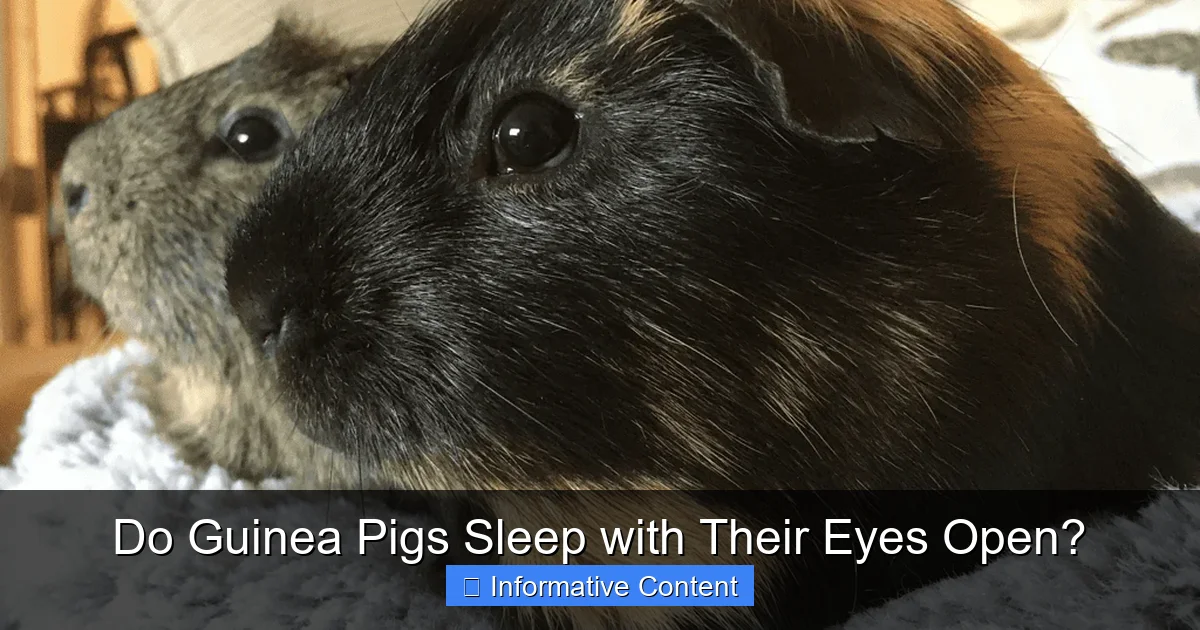
Visual guide about Do Guinea Pigs Sleep with Their Eyes Open?
Image source: childhoodpets.com
If your guinea pig’s eyes are open, how can you tell if they’re actually sleeping or just relaxing? It can be tricky, but there are several subtle clues that give away a napping cavy. It’s all about observing their overall body language and behavior.
Subtle Clues to a Resting Cavy
When a guinea pig is truly sleeping, even with open eyes, you’ll notice a distinct change in their demeanor. Their body will typically be very relaxed, perhaps stretched out or gently slumped. Their breathing will become slower and more regular, and you might even see a slight twitching of their whiskers or ears – similar to how dogs or cats twitch during dreams. Their muscles will be limp, and they won’t be actively grooming, eating, or interacting with their surroundings. If you gently approach, they might not react immediately, or they might stir slowly rather than springing up with a start. It’s a subtle stillness, a quiet contentment that signals they are indeed enjoying some downtime.
The Difference Between Resting and Deep Sleep
It’s important to remember that guinea pigs don’t experience the same long, deep sleep cycles that humans do. Their “sleep” is more akin to a series of very deep rests and light naps. While they might enter a state of deeper relaxation, it’s rarely prolonged. These short bursts of rest are enough to recharge their small bodies. The key difference between just resting and truly sleeping, even with open eyes, often lies in the depth of their relaxation. A guinea pig that is simply resting will still be quite alert and ready to move, whereas a sleeping one will be more still, calmer, and less reactive, despite their open eyes. Observing these nuances helps you understand if your guinea pig is actually getting the rest they need.
Guinea Pig Sleep Cycles: Short and Sweet
Understanding that guinea pigs often sleep with their eyes open is just one piece of the puzzle. Their entire sleep pattern is quite unique, differing significantly from our own. They are considered polyphasic sleepers, meaning their sleep is distributed in multiple short bouts throughout a 24-hour cycle.
Napping Through the Day and Night
Guinea pigs are often described as crepuscular, meaning they are most active during dawn and dusk. However, their sleep schedule is far more flexible. They will take numerous short naps, lasting anywhere from a few minutes to half an hour, both during the day and throughout the night. This fragmented sleep pattern is another survival adaptation; it prevents them from being in a vulnerable, deep sleep for extended periods. Instead, they get their rest in bite-sized chunks, always ready to wake up and flee if necessary. So, don’t be surprised if you see your guinea pig snoozing at various times, whether it’s the middle of the afternoon or late at night. The question “Do guinea pigs sleep with their eyes open?” relates directly to this napping behavior.
The Importance of Uninterrupted Rest
Even though their sleep is fragmented, the quality of those short naps is crucial. For a guinea pig to truly benefit from their rest, they need to feel safe and secure. Constant disturbances can lead to stress and insufficient rest, potentially impacting their health and temperament. Providing a quiet, stable environment minimizes disruptions and allows them to achieve those precious moments of relaxation. Think about it: if you were constantly worried about being surprised, even your short naps wouldn’t be very restorative. The same goes for your guinea pig. Ensuring they have periods where they feel completely secure will greatly improve their ability to enter a restful state, even when their eyes are open.
Creating a Sanctuary for Sleep: Tips for Owners
Knowing that guinea pigs sleep with their eyes open due to their prey instincts empowers us to create an environment that maximizes their sense of security. A well-designed habitat can make all the difference in helping your cavy get quality rest.
The Perfect Hidey House
One of the most important elements for a guinea pig’s sense of security is a comfortable, private hidey house. Every guinea pig in a cage should have at least one hideaway – and ideally more – where they can retreat. These can be igloos, fabric tunnels, wooden houses, or even just a cardboard box. The key is that it provides a dark, enclosed space where they feel protected from all angles. When your guinea pig can curl up in a cozy hideaway, they feel less exposed, which helps them relax more deeply, even if they still technically sleep with their eyes open. Ensure the hidey house is large enough for them to turn around comfortably but snug enough to feel secure.
Managing Light and Sound
While guinea pigs will nap throughout the day, too much constant light or noise can be disruptive. Try to place their cage in a relatively quiet area of your home, away from loud televisions, booming speakers, or high-traffic doorways. If their cage is in a brightly lit room, you might consider covering a portion of it with a breathable blanket during peak brightness to create a dimmer, more restful corner. Similarly, avoid making sudden, loud noises directly next to their cage. Consistency in their environment helps them feel safe, making it easier for them to doze off, even when they appear to sleep with their eyes open.
Social Comfort and Security
Guinea pigs are highly social animals and thrive in pairs or small groups. Having companions provides an additional layer of security, as they can take turns being vigilant. A lone guinea pig might feel more anxious and struggle to relax, always feeling the sole responsibility for watching out for danger. If you have multiple guinea pigs, you might observe them huddling together for naps, finding comfort and safety in numbers. Regular, gentle interaction with you, their human parent, also builds trust and helps them feel more secure in their home environment. A calm, confident owner contributes to a calm, confident guinea pig, which is more likely to rest well, even when those eyes are open.
When Open Eyes Might Mean Something Else
While it’s normal for guinea pigs to sleep with their eyes open, it’s also important to recognize that sometimes, open eyes combined with other behaviors can signal a problem. Not every moment of stillness with open eyes is restful sleep.
Signs of Unrest or Anxiety
If your guinea pig is sitting still with wide, open eyes but seems tense, hunched, or agitated, they might not be sleeping. Instead, they could be stressed, uncomfortable, or even in pain. Look for other accompanying signs:
- Stiff posture: Are they rigid instead of relaxed?
- Rapid, shallow breathing: Is their breathing labored or unusually fast?
- Lack of interest in food or water: Are they refusing their favorite snacks or not drinking?
- Changes in droppings: Are their droppings unusually small, misshapen, or absent?
- Hiding excessively: Are they spending all their time hidden away and unwilling to come out?
- Ruffled fur or unusual grooming: Does their fur look unkempt, or are they over-grooming one spot?
If you notice these behaviors alongside open eyes and stillness, it’s a sign that something is amiss, and it’s not simply a case of “Do guinea pigs sleep with their eyes open?” being answered by a normal nap.
Consulting Your Vet
Any significant change in your guinea pig’s behavior, particularly if it involves lethargy, lack of appetite, or signs of pain, warrants a call to your veterinarian. Guinea pigs are prey animals, and they are masters at hiding illness until it’s quite advanced. Their natural instinct is to appear healthy to avoid attracting predators. Therefore, if you suspect your guinea pig is unwell, don’t delay in seeking professional advice. A vet experienced with small animals can assess your cavy, determine the cause of their discomfort, and provide appropriate treatment, helping them get back to their healthy, happy, and yes, even open-eyed, slumber.
Conclusion
The question “Do guinea pigs sleep with their eyes open?” is one that fascinates and occasionally baffles new and experienced owners alike. The answer, as we’ve explored, is a resounding yes, and it’s a testament to their incredible adaptability as a species. This seemingly peculiar behavior is a clever evolutionary strategy, allowing them to remain vigilant against perceived threats even while snatching some much-needed rest.
By understanding their natural instincts and unique polyphasic sleep patterns, we can take proactive steps to ensure our guinea pigs feel as secure and comfortable as possible. Providing cozy hidey houses, a peaceful environment, and the companionship of other guinea pigs contributes significantly to their overall well-being. So, the next time you see your furry friend seemingly staring off into space while perfectly still, you’ll know they’re likely just catching some Z’s, their watchful eyes a silent sentinel of their enduring survival spirit. Embrace their quirks, provide them with a loving sanctuary, and you’ll have a happy, well-rested guinea pig, eyes open or not!
Frequently Asked Questions
What is “polyphasic sleep” in guinea pigs?
Polyphasic sleep refers to an animal’s sleep pattern where rest is broken up into multiple short periods throughout the day and night, rather than one long, continuous stretch. Guinea pigs are classic examples of polyphasic sleepers, adapting their rest to their environment and needs as prey animals.
Are guinea pigs nocturnal or diurnal?
Guinea pigs are generally considered crepuscular, meaning they are most active during dawn and dusk. However, their flexible sleep patterns mean they nap throughout both the day and night, adjusting their activity levels to suit their environment and sense of safety.
Can stress affect how a guinea pig sleeps?
Yes, stress can significantly impact a guinea pig’s sleep quality. If a guinea pig feels insecure or anxious, they may struggle to relax even for short naps, leading to restless behavior, increased vigilance, and potentially health issues due to insufficient rest.
Do guinea pigs dream?
While it’s difficult to definitively say if guinea pigs “dream” in the same way humans do, they do exhibit rapid eye movement (REM) during deeper stages of their short sleep cycles. This, along with occasional twitching of whiskers or feet, suggests they might experience something akin to dreams or processing of daily events.
Should I cover my guinea pig’s cage at night?
You can cover part of your guinea pig’s cage with a breathable blanket or towel, especially if the room stays bright or has drafts. This can provide a sense of security and darkness, encouraging them to relax. However, ensure there’s always plenty of fresh air circulation and don’t cover the entire cage.
How can I tell if my guinea pig is truly relaxed while sleeping with open eyes?
Look for a relaxed body posture, such as being stretched out or slumped, slow and steady breathing, minimal muscle tension, and occasional light twitching of whiskers or ears. They won’t be actively engaging with their surroundings or reacting quickly to subtle movements or sounds.