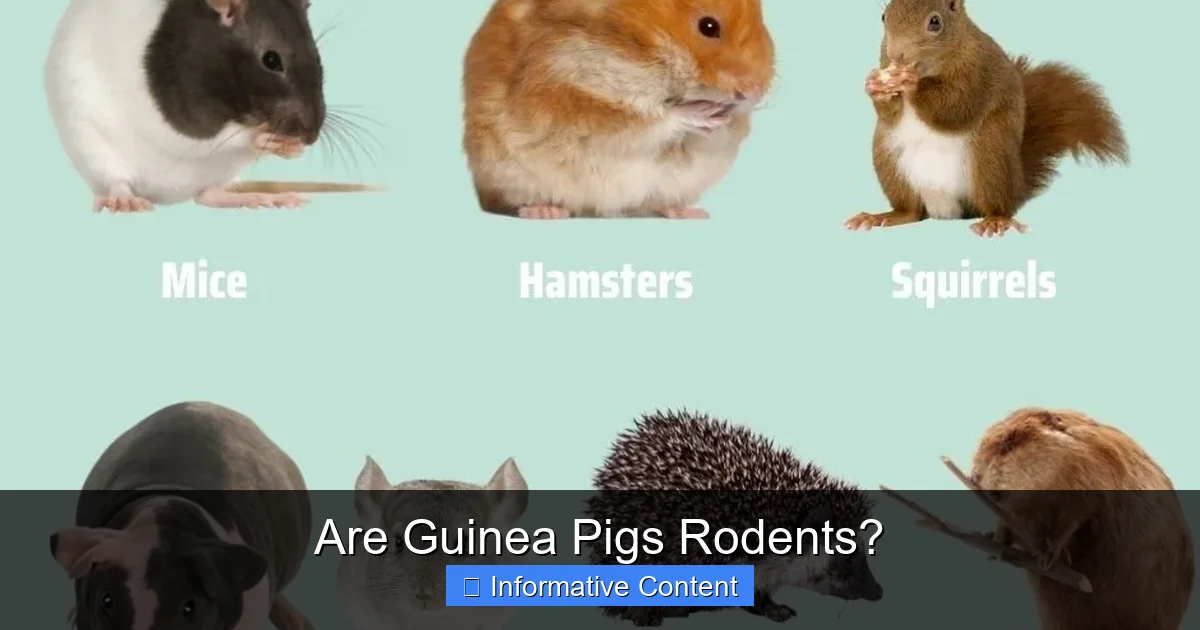
Are Guinea Pigs Rodents? The answer might surprise you! While often grouped with rodents due to superficial similarities, modern genetic research has confirmed that guinea pigs are not true rodents in the traditional sense. They belong to a distinct suborder called Hystricomorpha, sharing common ancestry but possessing unique evolutionary traits that set them apart, especially when it comes to their specific care needs.
Walk into almost any pet store or browse online forums, and you’ll often hear the question whispered, debated, or sometimes loudly proclaimed: “Are guinea pigs rodents?” It’s a common query, and for good reason! These adorable, chatty little creatures with their distinctive squeaks and love for fresh veggies often look a bit like their rodent cousins, such as rats or hamsters.
For a long time, even scientists grouped guinea pigs, scientifically known as Cavia porcellus, squarely within the order Rodentia. This classification made sense on the surface. They’re small mammals, they have continuously growing incisors, and they breed relatively quickly. All classic signs, right?
However, the world of science is always evolving, and our understanding of the animal kingdom is constantly refined thanks to new tools and research. What we once thought to be true has been wonderfully updated. So, let’s dive into the fascinating truth behind this popular pet puzzle and uncover why your beloved guinea pig might be more unique than you ever imagined.
Contents
- Key Takeaways
- Quick Answers to Common Questions
- 📑 Table of Contents
- The Historical View: Why Guinea Pigs Were Once Labeled Rodents
- A Scientific Revelation: The Shift to Hystricomorpha
- Unique Traits: What Sets Guinea Pigs Apart
- Why Classification Matters for Pet Owners
- Dispelling Myths and Promoting Responsible Pet Care
- Conclusion
- Frequently Asked Questions
Key Takeaways
- Not Traditional Rodents: Guinea pigs are scientifically classified outside the “typical” rodent family, despite shared superficial traits.
- Hystricomorpha Suborder: They belong to a unique suborder that includes porcupines and chinchillas, making them distinct from common rodents like rats and mice.
- Genetic Reclassification: Modern DNA analysis revolutionized their classification, proving their unique evolutionary path and overturning older groupings.
- Distinct Physical Traits: Their dental structure (beyond just incisors), reproductive patterns, and physiological makeup differ significantly from traditional rodents.
- Specialized Care Needs: Understanding their classification highlights their crucial specific dietary requirements (e.g., inability to synthesize Vitamin C), social needs, and veterinary considerations.
- Impact on Pet Ownership: Knowing they aren’t “just rodents” helps owners provide more accurate, tailored care and enrichment, leading to healthier, happier pets.
Quick Answers to Common Questions
Are guinea pigs true rodents?
No, despite common misconceptions and historical classifications, guinea pigs are not considered true rodents in the traditional sense by modern science. While they share some superficial traits, genetic evidence has led to their reclassification.
What is the correct scientific classification for guinea pigs?
Guinea pigs belong to the suborder Hystricomorpha, within the order Rodentia, but are evolutionarily distinct from the more common “murid” rodents like rats and mice. Some scientists even propose them belonging to their own separate order, Caviomorpha.
Why were guinea pigs once classified as rodents?
Historically, guinea pigs were grouped with rodents due to shared morphological traits such as continuously growing incisors, their small size, and general appearance. These visible similarities led early taxonomists to place them within Rodentia.
What’s a key difference between guinea pigs and typical rodents?
One key difference lies in their genetic makeup and unique dental structures beyond just the incisors. Their reproductive strategy, where offspring are born precocial (well-developed), also differs significantly from most typical rodents who have altricial (helpless) young.
Why does this reclassification matter for guinea pig owners?
Understanding their true classification helps owners provide appropriate care. It highlights their unique dietary needs (e.g., Vitamin C deficiency), social requirements, and distinct physiological differences that impact veterinary treatment and overall well-being, proving they’re not just “large hamsters.”
📑 Table of Contents
The Historical View: Why Guinea Pigs Were Once Labeled Rodents
The question, “Are guinea pigs rodents?” has a long and interesting history. For centuries, and even into recent decades, the scientific community broadly agreed that guinea pigs were indeed part of the order Rodentia. This was based on observable traits and a classification system that relied heavily on morphology – the study of the form and structure of organisms. It made sense at the time, given what we could easily see with our eyes.
Superficial Similarities to Classic Rodents
When you look at a guinea pig, what do you notice first? They’re small, furry, and often chew on things. These traits immediately bring to mind common rodents like mice, rats, and hamsters. All these animals share a few key characteristics. For instance, guinea pigs, just like other rodents, possess continuously growing incisors. These front teeth never stop growing, which means they need to be constantly worn down by chewing. This shared dental feature was a significant factor in their initial classification. Without proper chewing, these teeth can become overgrown, causing serious health issues – a problem familiar to owners of many rodent species.
Beyond teeth, their general body size and shape also contributed to the “rodent” label. They are small, quadrupedal mammals. They also reproduce relatively quickly and have relatively large litters, another trait often associated with prolific rodent populations. These surface-level resemblances made the historical classification seem logical and straightforward. When people wonder, “Are guinea pigs rodents?” these are often the first things they think about.
Defining Features of the Order Rodentia
To truly understand why guinea pigs were considered rodents, and why that view changed, it’s helpful to understand what defines the order Rodentia itself. This is the largest order of mammals, encompassing over 40% of all mammal species! The defining characteristic, the “rodent” part of the name, comes from the Latin word rodere, meaning “to gnaw.”
All true rodents share a specific dental arrangement. They have a single pair of continuously growing incisors in both the upper and lower jaws. These incisors are chisel-like and rootless, meaning they grow throughout the animal’s life. Behind these incisors, there’s a gap called a diastema, followed by molars. Rodents lack canines entirely. Their jaw muscles and structure are also highly adapted for gnawing. This specialized dentition allows them to chew through tough materials like wood, nuts, and seeds. The assumption was that since guinea pigs shared these crucial dental features, they must logically be rodents.
However, as we’ll soon discover, while guinea pigs do have continuously growing incisors and lack canines, their deeper evolutionary history tells a different, more nuanced story. The simple question, “Are guinea pigs rodents?” requires a much deeper look than just surface appearances.
A Scientific Revelation: The Shift to Hystricomorpha
For decades, the traditional classification of guinea pigs within the vast order Rodentia seemed solid. But as scientific tools evolved, particularly with the advent of genetic analysis, our understanding of evolutionary relationships began to change dramatically. What was once based on visible anatomy could now be explored at a molecular level, rewriting entire family trees.
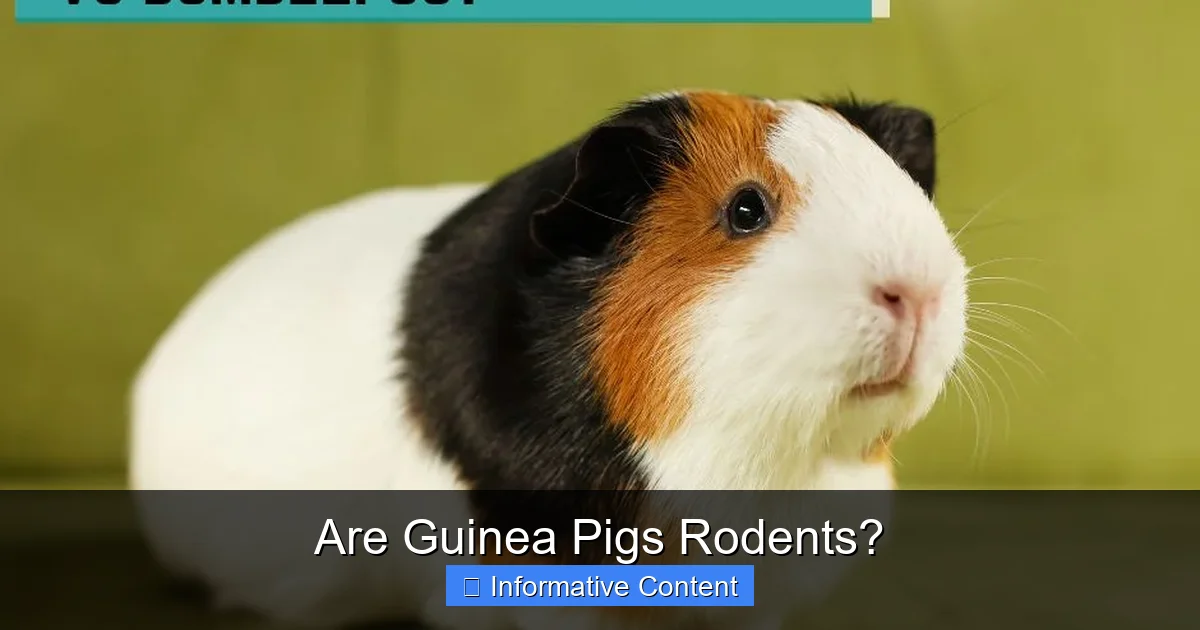
Visual guide about Are Guinea Pigs Rodents?
Image source: moreguineapigs.com
The Power of Genetic Analysis
The turning point in answering the question, “Are guinea pigs rodents?” came with advanced genetic studies. Scientists began analyzing the DNA of various species, comparing their genetic codes to map out evolutionary pathways with unprecedented accuracy. These studies revealed that while guinea pigs are indeed part of the broader group of gnawing mammals, their lineage diverged incredibly early from what we consider “typical” rodents like rats, mice, and hamsters.
Genetic evidence showed that guinea pigs, along with chinchillas, porcupines, and capybaras, form a distinct and ancient group within the Rodentia order. This group is now recognized as the suborder Hystricomorpha. This finding was a major shake-up, suggesting that the similarities guinea pigs share with other rodents are often a result of convergent evolution – where different species evolve similar traits independently, rather than sharing a very close common ancestor for those specific traits. So, while you might still hear people debate, “Are guinea pigs rodents?” the scientific consensus points to a more nuanced answer.
What Makes a Hystricomorph Different?
The Hystricomorpha suborder isn’t just a fancy name; it signifies real biological differences. One of the primary distinguishing features lies in their cranial and jaw muscle structure, particularly the masseter muscle (responsible for chewing). Hystricomorphs have a unique arrangement where part of the masseter muscle passes through the infraorbital foramen (a hole in the skull) and connects to the cheekbone in a distinct way. This is different from the jaw muscle arrangement found in other rodent groups, such as the Sciuromorpha (squirrels) or Myomorpha (mice and rats).
Another significant difference is their reproductive strategy. Guinea pigs are born precocial, meaning their babies (pups) are born relatively well-developed, with fur, open eyes, and the ability to run and eat solid food within hours of birth. This is in stark contrast to altricial young of many typical rodents, which are born blind, hairless, and utterly helpless. This precocial development is a key evolutionary trait that further separates hystricomorphs from their more distant rodent cousins. These deeper biological distinctions explain why answering “Are guinea pigs rodents?” with a simple “yes” doesn’t quite capture the full picture.
Unique Traits: What Sets Guinea Pigs Apart
Moving beyond the taxonomic debate of “Are guinea pigs rodents?”, it’s essential to appreciate the many unique characteristics that define these wonderful pets. Understanding these traits is vital for any owner who wants to provide the best possible care for their furry companion.
Dietary Specifics and Vitamin C Needs
Perhaps one of the most critical unique aspects of guinea pigs is their inability to synthesize their own Vitamin C. Unlike most mammals, including many other rodents, guinea pigs (along with humans and a few other species) must obtain Vitamin C from their diet. This makes them highly susceptible to scurvy if their diet lacks this essential nutrient. This isn’t a trait commonly shared with most other rodent species, which generally produce their own Vitamin C.
Their diet should consist primarily of unlimited fresh hay (like Timothy hay), which is crucial for dental health and digestion. Fresh vegetables rich in Vitamin C, such as bell peppers, kale, and parsley, should be offered daily. High-quality guinea pig pellets, fortified with Vitamin C, are also important but should be given in measured amounts. Providing these specific dietary components is a prime example of why knowing the answer to “Are guinea pigs rodents?” is so important for their health.
Social Structure and Communication
Guinea pigs are highly social animals. In the wild, they live in herds, and in captivity, they thrive with companionship, ideally living in pairs or small groups. Keeping a single guinea pig can lead to loneliness and stress. They communicate through a surprisingly wide range of vocalizations: the famous “wheek” of excitement, purrs of contentment, chirps, rumbling, and various alarm calls. This complex social behavior and vocal repertoire are far more developed than many solitary or less communicative rodent species.
Providing ample space, multiple hiding spots, and opportunities for interaction are crucial for their well-being. Consider two compatible guinea pigs for a happier environment. This social complexity further emphasizes their unique nature when compared to the broader “rodent” category.
Reproductive Strategies: A Different Approach
As touched upon earlier, guinea pigs have a distinct reproductive strategy. Their gestation period is relatively long for a small mammal, ranging from 59 to 72 days. The result of this longer gestation is the birth of precocial pups, which are far more developed than the altricial young of typical rodents. Guinea pig pups are born with fur, open eyes, and can run and eat solid food within hours. This high level of development at birth is a significant evolutionary divergence and further supports their unique place in the animal kingdom.
This difference in reproductive strategy is a clear biological marker separating them from many other animals that people often mistakenly lump together when asking, “Are guinea pigs rodents?”
Why Classification Matters for Pet Owners
Understanding the scientific classification of guinea pigs – that they are distinct Hystricomorphs rather than “typical” rodents – is not just an academic exercise. It has profound practical implications for their care, health, and overall well-being. Knowing their true nature helps us move beyond generalizations and provide truly specialized care.
Tailored Nutritional Needs
The most immediate impact of their classification on pet ownership relates to diet. Because guinea pigs cannot produce their own Vitamin C, owners must be diligent in providing daily sources. This means feeding specific fresh vegetables high in Vitamin C and ensuring their pellets are fortified. This is a critical difference from many other pets, including most typical rodents, who do not share this dietary constraint.
For example, you wouldn’t feed a guinea pig a diet designed for a hamster or a rat, which often contains seeds and nuts that are too high in fat and too low in fiber for a guinea pig. Guinea pigs require a diet primarily of hay, fresh greens, and a limited amount of specialized pellets. Neglecting their specific dietary needs, especially Vitamin C, can lead to serious health issues like scurvy, characterized by lethargy, joint pain, and poor coat quality. This precise dietary requirement is a direct result of their unique evolutionary path.
Veterinary Care Considerations
Veterinarians specializing in exotic animals are keenly aware of the differences between various small mammals. When you visit the vet, knowing that your pet is a Hystricomorph, not just any rodent, helps ensure they receive appropriate medical attention. Guinea pigs have unique physiological responses to certain medications and anesthetics, and their common ailments can differ from those of other small “rodents.”
For instance, respiratory infections are common in guinea pigs and require specific treatments. Dental issues related to their continuously growing teeth are also prevalent, but the specific presentation and treatment can differ from, say, a rabbit (which is also not a rodent but shares dental challenges). Owners should seek out vets experienced with guinea pigs, who understand these particular needs, rather than assuming their care is interchangeable with other small animals. This is where the nuanced answer to “Are guinea pigs rodents?” becomes critical for health.
Understanding Behavior and Enrichment
Recognizing guinea pigs as unique social creatures helps owners provide appropriate housing and enrichment. Unlike some solitary rodent species, guinea pigs thrive in groups. This means planning for multiple guinea pigs and providing larger enclosures that allow for social interaction, exploration, and hiding. Their preference for companionship and their rich vocalizations are behaviors specific to their species.
Enrichment should include plenty of hay to forage in, tunnels to explore, safe chew toys, and hidey houses. Understanding their natural behaviors and specific needs for enrichment, rather than treating them as generic “cage animals,” leads to happier, healthier, and more engaged pets. This insight truly changes how we approach their daily lives, moving beyond the simple question of “Are guinea pigs rodents?” to embrace their individuality.
Dispelling Myths and Promoting Responsible Pet Care
The common misconception that “Are guinea pigs rodents?” is a simple “yes” has unfortunately led to widespread misunderstandings about their care. By clarifying their true classification, we can dispel myths and promote a more informed, responsible approach to pet ownership.
The “Easy Pet” Myth
Often, guinea pigs are mistakenly perceived as “starter pets” or “easy pets” suitable for young children, largely because of their small size and the general assumption that they are just another type of small rodent. However, this couldn’t be further from the truth. Guinea pigs require significant commitment, including daily care, a specific diet, regular cage cleaning, and veterinary attention. They live for 5-7 years on average, which is a substantial commitment for any family.
Dispelling the myth that they are just “easy rodents” helps potential owners understand the true responsibilities involved. They need patient and consistent handling, a secure and spacious environment, and a consistent routine to thrive. Responsible pet ownership begins with understanding the true nature of the animal you bring into your home.
Creating an Ideal Environment
Based on their unique needs as Hystricomorphs, creating an ideal environment for guinea pigs means more than just a small cage and some pellets. Their enclosure should be as large as possible, offering room for zoomies and popcorning (their joyful jumps). Wire-bottom cages are a no-go, as they can cause painful foot conditions (bumblefoot); solid bottoms with soft bedding are essential.
Providing fresh water daily, a constant supply of hay, and daily fresh vegetables are non-negotiable. Regular health checks, including monitoring their teeth, weight, and general demeanor, are vital. Understanding that these furry friends are not simply generic “rodents” encourages owners to delve deeper into their specific needs, investing in appropriate housing, nutrition, and companionship that truly benefits these special creatures.
Conclusion
So, are guinea pigs rodents? Yes, technically, they belong to the order Rodentia, but that’s where the simple answer ends and the fascinating details begin. Modern science, armed with genetic evidence, has revealed that guinea pigs are not “typical” rodents like rats or mice. Instead, they occupy their own unique evolutionary branch within Rodentia, the suborder Hystricomorpha, alongside animals like porcupines and chinchillas.
This reclassification is far more than a mere academic detail; it’s a vital piece of information for every guinea pig owner. It underscores their distinct dietary needs, particularly their inability to produce Vitamin C, and highlights their unique social behaviors, reproductive strategies, and physiological characteristics. By understanding that your beloved guinea pig is a special Hystricomorph, you are better equipped to provide the specific, tailored care they require to live a healthy, happy, and fulfilling life. Let’s embrace their individuality and provide them with the informed, loving homes they truly deserve.
Frequently Asked Questions
Do guinea pigs still belong to the order Rodentia?
Yes, guinea pigs are still technically placed within the larger order Rodentia. However, modern genetic analysis shows they are part of a distinct suborder, Hystricomorpha, which separates them evolutionarily from “typical” rodents like rats and mice.
What is Hystricomorpha?
Hystricomorpha is a suborder within Rodentia that includes animals like porcupines, chinchillas, and guinea pigs. These animals share a common ancestor and distinct cranial and jaw muscle structures that differentiate them from other rodent groups.
While all are part of the broader order Rodentia, guinea pigs are only distantly related to hamsters and mice. Genetic studies reveal that guinea pigs belong to a completely different lineage within Rodentia, meaning their evolutionary path diverged long ago.
Do guinea pigs need to chew constantly like other rodents?
Yes, guinea pigs do have continuously growing incisors, similar to many rodents, requiring them to chew regularly. Providing ample hay, safe chew toys, and fibrous vegetables is crucial to prevent dental problems from overgrown teeth.
Can guinea pigs transmit diseases like rats or mice?
Guinea pigs generally pose a lower risk of transmitting zoonotic diseases (diseases transferable to humans) compared to wild rats or mice. However, like any pet, they can carry certain bacteria or parasites, so good hygiene practices are always recommended.
How does their classification affect their diet?
Their unique classification, especially as a Hystricomorph, highlights specific dietary needs. Crucially, guinea pigs cannot synthesize their own Vitamin C and must obtain it from their diet, a requirement not shared by many typical rodents.