Ever wondered where guinea pigs live in the wild? Their ancestors, known as wild cavies, originate from the grassy plains and high-altitude regions of the Andes Mountains in South America. These resilient creatures have adapted unique survival strategies, living in small herds and creating complex burrow systems to thrive in their natural environment, far removed from our cozy homes.
Those adorable, chattering fluff balls we welcome into our homes are known as guinea pigs. They’re cherished for their gentle nature and quirky personalities. But have you ever stopped to ponder a fascinating question: where do guinea pigs live in the wild? It’s a question many pet owners ask, often imagining their beloved companion foraging in lush, faraway lands.
The truth is, the guinea pig you know as Cavia porcellus doesn’t actually exist in the wild. Our domestic guinea pigs are a product of thousands of years of selective breeding. They are entirely dependent on humans for survival. However, their story doesn’t end there! To answer where guinea pigs live in the wild, we need to look back in time and journey to a specific, breathtaking part of the world to meet their wild ancestors. These fascinating creatures, often called “cavies,” still roam free and offer incredible insights into the origins of our furry friends.
This article will take you on an exciting expedition to discover the true natural habitat of guinea pigs. We’ll explore the rugged landscapes of South America, understand the survival strategies of their wild relatives, and learn how these small animals have adapted to some surprisingly harsh environments. Get ready to uncover the secret lives of the wild ancestors of our beloved pets and truly grasp where do guinea pigs live in the wild.
Contents
- Key Takeaways
- Quick Answers to Common Questions
- 📑 Table of Contents
- Unveiling the Ancestors: The Wild Cavies
- The Andean Homeland: Where Wild Cavies Thrive
- Life in the Wild: Survival Strategies and Adaptations
- Social Dynamics and Daily Life of Wild Guinea Pigs
- Wild vs. Domestic: Key Differences
- Conservation and the Future of Wild Cavies
- Conclusion
- Frequently Asked Questions
Key Takeaways
- Wild Ancestors: Domestic guinea pigs (Cavia porcellus) are not found in the wild themselves; they are descendants of several wild cavy species, primarily Cavia tschudii.
- Andean Habitat: The natural habitat where guinea pigs live in the wild is the rugged, high-altitude grasslands and rocky areas of the Andes Mountains.
- Geographical Spread: These wild ancestors are found in countries such as Peru, Bolivia, Ecuador, Colombia, Chile, and parts of Argentina, living at elevations up to 4,000 meters (13,000 feet).
- Burrow Dwellers: Wild cavies live in intricate burrow systems, either self-dug or abandoned by other animals, providing crucial shelter from predators and extreme weather.
- Social Structure: They are highly social animals, living in small family groups or herds. This group living is vital for vigilance against predators and social learning.
- Herbivorous Diet: Their diet in the wild consists exclusively of various grasses, leaves, roots, and tubers found in their harsh, natural environment.
- Survival Adaptations: Wild guinea pigs possess excellent camouflage, acute senses, and a vigilant nature, all essential for surviving in an ecosystem with numerous predators.
Quick Answers to Common Questions
Question 1?
Where exactly in South America do wild guinea pigs live?
Answer 1?
Wild guinea pigs, specifically their ancestors known as cavies, primarily live in the high-altitude grasslands and rocky areas of the Andes Mountains. Their range spans several South American countries including Peru, Bolivia, Ecuador, Colombia, Chile, and parts of Argentina.
Question 2?
What kind of shelter do wild guinea pigs use?
Answer 2?
Wild guinea pigs use burrows for shelter. They either dig their own complex tunnel systems or cleverly utilize burrows abandoned by other animals, such as viscachas or armadillos. These burrows protect them from predators and the harsh Andean weather.
Question 3?
Are the guinea pigs we keep as pets the same as wild guinea pigs?
Answer 3?
No, the guinea pigs we keep as pets (Cavia porcellus) are a domesticated species and do not live in the wild. They are descended from wild cavy species, primarily Cavia tschudii, but lack the instincts and physical adaptations needed to survive in a natural environment.
Question 4?
What do wild guinea pigs eat?
Answer 4?
Wild guinea pigs are strict herbivores. Their diet consists mainly of various grasses, leaves, small plants, roots, and tubers that they find in their natural grassland and scrubland habitats in the Andes.
Question 5?
Do wild guinea pigs live alone or in groups?
Answer 5?
Wild guinea pigs are highly social animals and live in small family groups or herds. This group living provides safety in numbers, helping them stay vigilant against predators and facilitating social learning.
📑 Table of Contents
Unveiling the Ancestors: The Wild Cavies
Let’s clear up a common misconception right away. When we talk about where guinea pigs live in the wild, we are not talking about your pet breaking free and fending for itself. Domestic guinea pigs are a unique species, bred by humans. They lack the instincts and physical traits needed to survive in a natural environment. Their wild counterparts are different species, though closely related.
Not Quite the Pet in Your Home
Imagine setting your pet guinea pig free in a field. It would likely struggle immensely. Domestic guinea pigs are larger, slower, and less agile than their wild cousins. They also have different coat colors that wouldn’t offer good camouflage against predators. Their diet has also become accustomed to the readily available food we provide. In short, they are not equipped for the challenges of survival in the wild.
Meet the Ancestral Species
The true wild ancestors of our pet guinea pigs are members of the genus Cavia, a group of rodents often referred to as “cavies.” While there are several species of wild cavies, scientists generally agree that the primary ancestor of the domestic guinea pig is most likely the Montane Guinea Pig, Cavia tschudii. Other closely related wild species include the Brazilian Guinea Pig (Cavia aperea) and the Greater Guinea Pig (Cavia magna), among others. These are the creatures that truly show us where guinea pigs live in the wild.
- Cavia tschudii: This species is found in the high-altitude regions of the Andes, spanning Peru, Bolivia, Chile, and Argentina. It’s hardy and well-adapted to cooler climates.
- Cavia aperea: More widespread, this cavy inhabits grasslands across Brazil, Uruguay, Paraguay, and Argentina, often preferring warmer, lower-altitude areas.
- Cavia fulgida: Found in Brazil, often in forest clearings and coastal regions.
These wild cavies are smaller, leaner, and much more alert than their domesticated relatives. They possess keen survival instincts, which are crucial for their existence in their natural surroundings.
A History of Domestication
The journey from wild cavy to cherished pet began thousands of years ago, around 5000 BC, in the Andes region. Ancient Andean civilizations, particularly the Inca, domesticated these wild cavies. Initially, they were primarily raised for food, playing a significant role in their diet. They were also used in religious ceremonies. Over centuries, these domesticated animals were selectively bred, leading to the larger, calmer, and more varied-looking guinea pigs we know today. This rich history underscores how deeply embedded their wild origins are, even if their current forms are vastly different.
The Andean Homeland: Where Wild Cavies Thrive
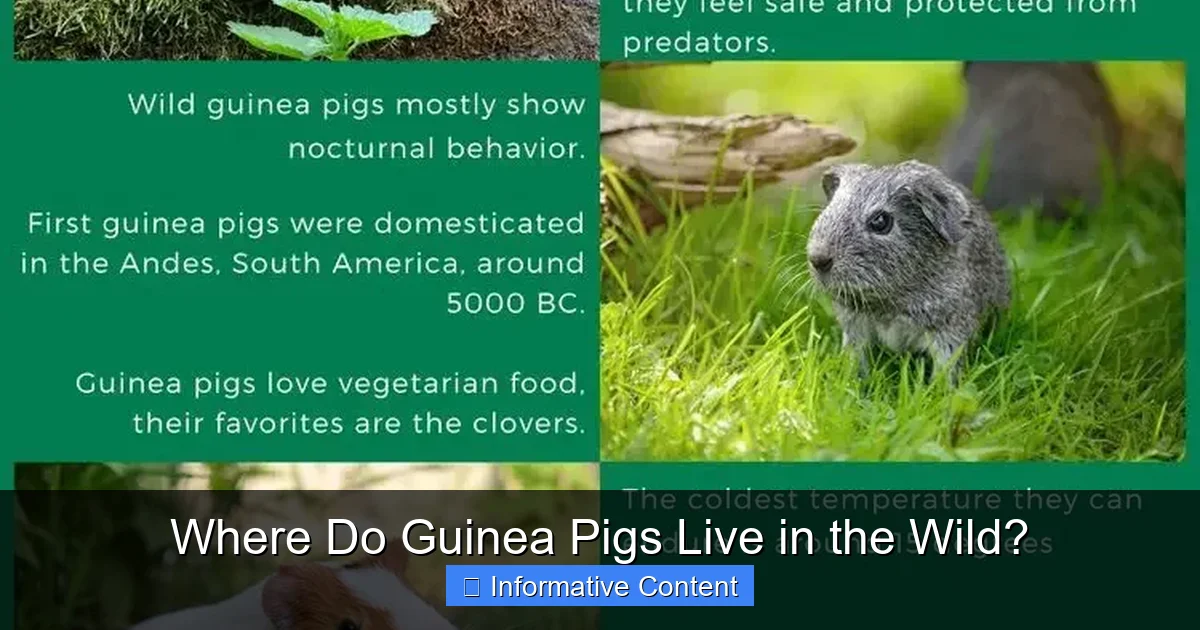
So, exactly where do guinea pigs live in the wild? Their ancestral home is a place of dramatic beauty and extreme conditions: the Andes Mountains of South America. This vast mountain range stretches along the western edge of the continent, offering a diverse array of habitats for its inhabitants, including the resilient wild cavies.
Visual guide about Where Do Guinea Pigs Live in the Wild?
Image source: guineapigtube.com
High-Altitude Grasslands and Rocky Slopes
The primary natural habitat of wild guinea pigs (specifically Cavia tschudii) is the “puna” or “altiplano” region. This includes high-altitude grasslands, rocky outcrops, and sparse scrublands. You’ll find them on mountain slopes, in valleys, and sometimes even in agricultural areas where they can find food and shelter. These areas are often characterized by tough, drought-resistant grasses and small shrubs. The terrain can be quite challenging, with steep inclines and rocky soil. This rugged landscape is precisely where guinea pigs live in the wild, making them incredibly adaptable creatures.
A Climate of Extremes
Life in the Andes is not for the faint of heart. The climate where guinea pigs live in the wild can be quite harsh. Temperatures can fluctuate dramatically within a single day, from warm, sunny afternoons to freezing nights. The region experiences distinct wet and dry seasons. The dry season can be particularly challenging, as food and water become scarce. Wild cavies have evolved to cope with these extremes, using their burrows as refuge from both the scorching sun and the biting cold.
Geographical Distribution
The range of wild cavies covers several South American countries. When asking where do guinea pigs live in the wild, we are talking about:
- Peru: A stronghold for Cavia tschudii, particularly in the mountainous regions.
- Bolivia: Also home to significant populations in its altiplano.
- Ecuador and Colombia: Found in the Andean highlands.
- Chile and Argentina: Their range extends into the northern parts of these countries.
These wild guinea pigs can be found at impressive elevations, ranging from sea level in some species to over 4,000 meters (about 13,000 feet) above sea level for species like Cavia tschudii. This wide distribution and ability to thrive at such varying altitudes highlight their incredible resilience and adaptability to their ancestral wild environment.
Life in the Wild: Survival Strategies and Adaptations
Survival in the Andes is a constant challenge. Wild cavies have developed a suite of clever strategies and adaptations to thrive in their harsh natural environment. These instincts are a window into understanding the core behaviors of our domestic pets.
The Importance of Burrows
One of the most critical survival tools for wild guinea pigs is their reliance on burrows. These underground tunnels and chambers serve multiple purposes. They provide:
- Shelter from Predators: Burrows offer immediate refuge from predators like eagles, foxes, pumas, and snakes.
- Temperature Regulation: The underground environment provides insulation, protecting cavies from the extreme daytime heat and freezing nighttime cold of the Andes.
- Safe Rearing of Young: Burrows are safe places for mothers to give birth and raise their pups away from danger.
Wild cavies are excellent excavators, but they also cleverly utilize abandoned burrows of other animals, such as viscachas or armadillos. They often create complex networks with multiple entrances and exits, making escape easier when danger looms. This communal use of burrows strengthens the answer to where do guinea pigs live in the wild, showing their dependence on subterranean shelters.
Masters of Camouflage
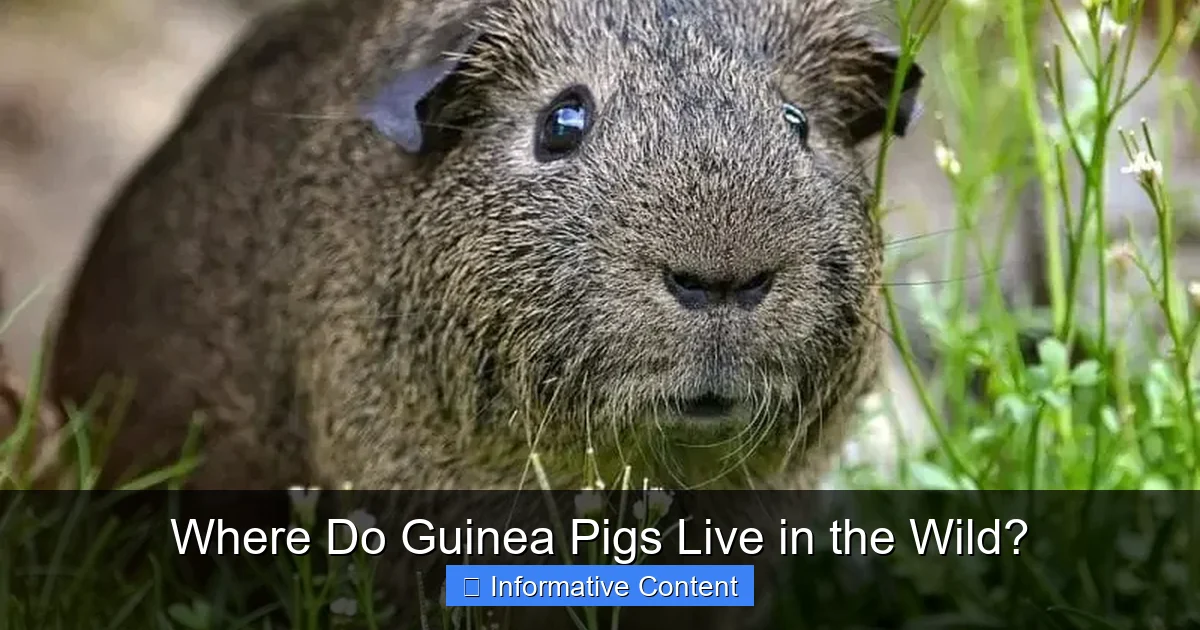
Unlike the diverse coat colors of domestic guinea pigs, wild cavies typically have dull, earthy tones. Their fur is usually brown, grey, or agouti (a mix of colors in each hair shaft), which blends seamlessly with the rocky, grassy terrain of their habitat. This natural camouflage is vital for avoiding detection by sharp-eyed predators. When they freeze or press themselves against the ground, they virtually disappear into their surroundings, a testament to their evolutionary prowess in the wild environment.
Vigilance and Group Living
Wild guinea pigs are highly vigilant creatures. They are constantly alert for signs of danger, using their excellent hearing and sense of smell. They live in small family groups or herds, which offers a significant advantage: more eyes and ears to spot predators. If one cavy detects a threat, it emits a sharp alarm call, sending the entire group scrambling for the safety of their burrows. This social structure is key to understanding where guinea pigs live in the wild and why they are such communal animals.
Practical Example: If you’ve ever had a domestic guinea pig make a sudden dash into its hidey house at the slightest unexpected noise, you’re seeing a diluted version of this wild instinct. That quick darting behavior is a direct echo of their ancestors’ need for swift evasion.
A Herbivorous Diet
Just like their domestic relatives, wild guinea pigs are strict herbivores. Their diet consists primarily of the grasses, leaves, and small plants available in their natural habitat. They are excellent foragers, constantly grazing throughout the day. In the dry season, they might also dig for roots and tubers to find moisture and nutrients. They are highly efficient at digesting fibrous plant material, thanks to a specialized digestive system similar to that of rabbits. This diet is a critical aspect of where guinea pigs live in the wild, as they are perfectly adapted to the vegetation of the Andes.
Social Dynamics and Daily Life of Wild Guinea Pigs
Understanding the social behavior of wild cavies gives us a deeper appreciation for the social needs of our pet guinea pigs. Their interactions in the wild are complex and essential for their survival.
Family Units and Herd Structure
Wild guinea pigs live in cohesive family units, typically consisting of one male, several females, and their offspring. These units might join with other families to form larger herds, especially in areas with abundant food. This group living provides safety in numbers and facilitates social learning. Young cavies learn important survival skills, like identifying safe foraging areas and recognizing predators, from their elders. This strong social bond is a defining characteristic of where guinea pigs live in the wild.
Communication in the Wild
Communication is vital within a cavy herd. Wild guinea pigs use a range of vocalizations and body language, much like their domestic relatives.
- Alarm Calls: Sharp squeals or chirps indicate immediate danger.
- Purrs and Rumbles: Can signify contentment or be part of courtship rituals.
- Squeaks and Whistles: Used for general communication, possibly to locate each other or express excitement.
They also use scent marking to define territories and communicate reproductive status. Observing a group of wild cavies is a lesson in constant, subtle communication, a testament to their sophisticated social structure in their natural habitat.
Reproduction and Raising Young
Wild cavies typically breed multiple times a year, especially when food is plentiful. After a gestation period of around 60-70 days, the female gives birth to a small litter of 1-4 pups. Unlike many other rodents, guinea pig pups are born precocial, meaning they are relatively well-developed at birth. They are born with fur, open eyes, and can run shortly after birth. This precocial development is a crucial adaptation for survival in a predator-filled wild environment, allowing them to quickly follow their mother and seek shelter. This rapid development is another key element of life where guinea pigs live in the wild.
Wild vs. Domestic: Key Differences
While sharing a common ancestor, wild cavies and domestic guinea pigs have diverged significantly over thousands of years of domestication. Recognizing these differences helps us understand their unique needs.
Appearance and Size
Wild Cavies:
- Smaller and leaner body, typically weighing 500-700 grams (1.1-1.5 lbs).
- More agile and nimble build, designed for quick escapes.
- Dull, camouflage coloration (brown, grey, agouti) for blending into their natural habitat.
- More compact, streamlined body shape.
Domestic Guinea Pigs:
- Larger and heavier build, often weighing 900-1200 grams (2-2.6 lbs) or more.
- Less agile, with a stockier frame.
- Wide variety of coat colors and patterns (white, black, orange, roan, Himalayan, etc.) and hair types (short, long, curly).
- Broader head and rounder body.
Behavior and Temperament
Wild Cavies:
- Extremely wary, shy, and quick to flee.
- Highly vigilant and constantly aware of their surroundings.
- Exhibit strong burrowing and hiding instincts.
- Their primary focus is survival, foraging, and predator avoidance in their wild environment.
Domestic Guinea Pigs:
- Generally docile, friendly, and can be quite trusting of humans.
- Less fearful and more prone to curiosity in a safe environment.
- Retain some hiding instincts but don’t actively burrow.
- Enjoy human interaction and thrive in a secure, stable home setting.
Lifespan and Health
Wild Cavies:
- Shorter lifespan, typically 1-3 years due to predators, harsh conditions, and scarcity of food in where guinea pigs live in the wild.
- Naturally resistant to many diseases due to natural selection.
Domestic Guinea Pigs:
- Longer lifespan, typically 5-7 years with proper care, diet, and veterinary attention.
- More susceptible to certain health issues (e.g., respiratory infections, dental problems) often linked to diet or genetics.
Diet Adaptations
While both are herbivores, their specific diets differ. Wild cavies consume a broader range of native grasses, wild herbs, and roots. Domestic guinea pigs rely on commercial pellets, hay, and fresh vegetables and fruits. Their digestive systems, while similar, are adapted to their respective food sources. Understanding the natural diet helps in providing optimal nutrition for our pets.
Conservation and the Future of Wild Cavies
While our focus has been on where do guinea pigs live in the wild, it’s also important to consider the conservation status of their wild ancestors. Many species of wild cavies are not currently endangered, but like all wildlife, they face increasing pressures.
Threats to Their Natural Habitat
The main threats to wild cavy populations include:
- Habitat Loss and Fragmentation: Due to agricultural expansion, urban development, and infrastructure projects in the Andes.
- Climate Change: Altering rainfall patterns and temperatures, impacting vegetation and water sources.
- Hunting: In some areas, wild cavies are still hunted for food or perceived as agricultural pests.
Protecting the natural habitat of these wild creatures is crucial not only for their survival but also for maintaining the biodiversity of the Andean ecosystem.
Why Their Wild Origins Matter
Understanding where guinea pigs live in the wild and the behaviors of their ancestors provides invaluable insights for pet owners. It helps us:
- Provide Better Care: Recognizing their need for companionship, hiding spots, and a high-fiber diet stems from their wild instincts.
- Appreciate Their Resilience: Their ability to thrive in such challenging environments highlights their incredible adaptations.
- Connect with Nature: It deepens our connection to the natural world and the journey of domestication.
The story of the wild cavy reminds us that even our most domesticated companions have a rich, untamed history.
Conclusion
So, we’ve journeyed through the high-altitude grasslands of the Andes to answer the question, where do guinea pigs live in the wild? We’ve learned that the familiar pet guinea pig doesn’t exist in the wild. Instead, its wild ancestors, various species of cavies like Cavia tschudii, are the true inhabitants of these rugged South American landscapes.
These wild cavies are masters of survival, using burrows for shelter, camouflage for protection, and group living for vigilance against predators. Their diet consists of the natural vegetation of their environment, and their social structures are complex and vital for their well-being. The stark differences between wild cavies and our domestic pets highlight the profound impact of domestication, yet the echoes of their wild instincts remain in the behaviors we observe in our homes.
Next time your guinea pig “popcorns” with joy or dives into a hidey house, remember its incredible heritage. It’s a testament to thousands of years of evolution and domestication, connecting your cuddly companion directly to the resilient wild cavies that still thrive in the magnificent, challenging heart of the Andes. Their story is a powerful reminder of nature’s ingenuity and the enduring bond between humans and animals.
Frequently Asked Questions
Do wild guinea pigs make good pets?
No, wild guinea pigs are not suitable as pets. They are much smaller, leaner, extremely shy, and possess strong flight instincts that make them difficult to handle and care for in a domestic setting. They thrive in their natural, wild environment.
How long do wild guinea pigs typically live?
In the wild, guinea pigs typically have a much shorter lifespan compared to their domesticated counterparts. Due to the constant threat of predators, harsh environmental conditions, and limited resources, they usually live for only 1 to 3 years.
What are the main predators of wild guinea pigs?
Wild guinea pigs face numerous predators in their Andean habitat. Common threats include birds of prey like eagles, various species of foxes, pumas, wild cats, and snakes. Their vigilance and burrowing habits are crucial for survival.
Are wild guinea pigs endangered?
While some specific wild cavy species might have localized concerns, most wild ancestors of guinea pigs, such as Cavia tschudii and Cavia aperea, are not currently classified as endangered. However, they do face threats from habitat loss and human activities.
Can wild and domestic guinea pigs interbreed?
Yes, wild cavies and domestic guinea pigs can interbreed. They are genetically very similar. However, their offspring would likely struggle to survive in the wild due to a lack of learned survival skills and potential genetic disadvantages from domestication.
Why is it important to know where guinea pigs live in the wild?
Understanding where guinea pigs live in the wild and the behaviors of their ancestors provides valuable insights for pet owners. It helps us provide better care, recognize their natural needs for companionship and hiding, and appreciate their remarkable evolutionary journey and resilience.