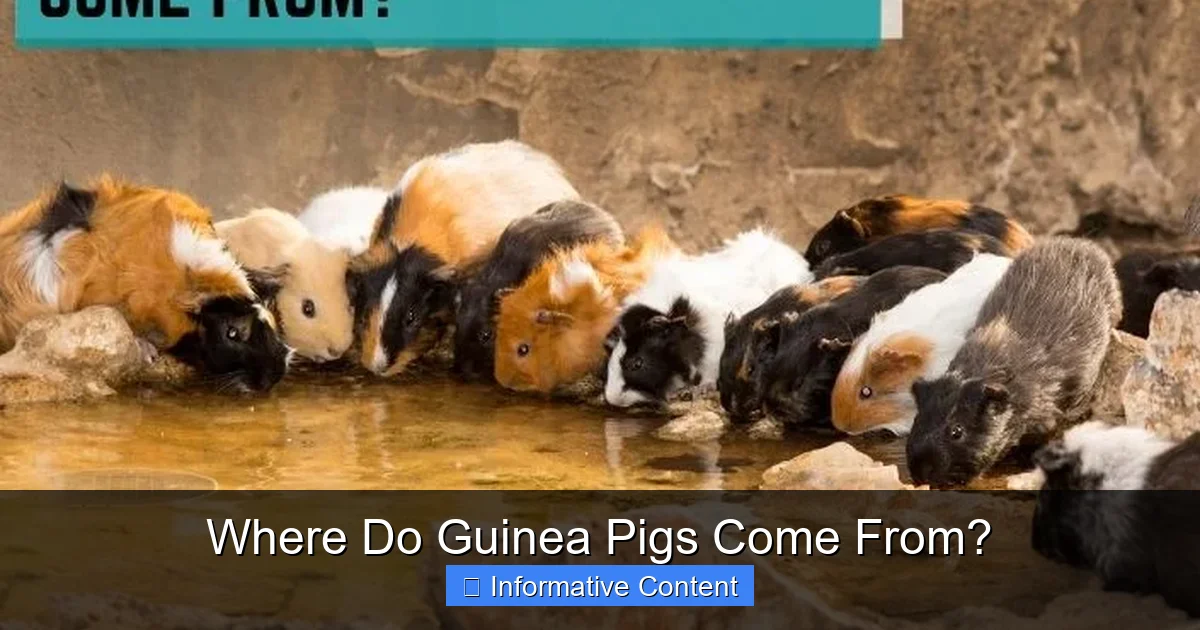
Ever wondered where do guinea pigs come from? These adorable pets trace their roots back thousands of years to the Andes Mountains of South America, where they were first domesticated by ancient indigenous civilizations. Their journey from wild cavies to beloved companions is a captivating tale of cultural significance, global travel, and careful breeding that transformed them into the cherished household members we know today.
You’ve probably seen them waddling around, munching on hay, or squealing with delight at the sound of a rustling bag. Guinea pigs are one of the most beloved small pets around the world, known for their charming personalities, adorable antics, and surprisingly complex communication. But have you ever paused to wonder about their beginnings? Have you ever thought, “where do guinea pigs come from?” It’s a question that opens the door to a fascinating journey through time, geography, and ancient cultures.
The story of where do guinea pigs come from isn’t just about a cute pet; it’s a tale steeped in history, stretching back thousands of years to a continent far away from most modern pet stores. These furry friends didn’t just appear out of nowhere; they have a rich, surprising past that involves wild relatives, ancient civilizations, and a significant role in human societies long before they became our cuddly companions. Understanding their origins can also give us a deeper appreciation for their needs and behaviors as pets today.
Join us as we explore the captivating history of guinea pigs, from their wild roots in the rugged Andes Mountains to their status as cherished members of families worldwide. We’ll uncover their scientific name, their vital role in ancient cultures, and how they made their way across oceans to become the pets we adore. So, if you’re ready to unravel the mystery and truly understand where do guinea pigs come from, let’s dive in!
Contents
- Key Takeaways
- Quick Answers to Common Questions
- Question 1? Where did guinea pigs originally come from?
- Question 2? What is the scientific name for the domestic guinea pig?
- Question 3? When were guinea pigs first domesticated?
- Question 4? Why are they called “guinea pigs” if they’re not from Guinea or pigs?
- Question 5? What was the primary role of guinea pigs in ancient Andean cultures?
- 📑 Table of Contents
- The Ancient Cradle: The Andes Mountains of South America
- A Story of Domestication: Guinea Pigs and Ancient Civilizations
- From the New World to the Old: Guinea Pigs Arrive in Europe
- The Modern Guinea Pig: Evolution into Beloved Pets
- Caring for Your Andean Descendant: Practical Tips for Pet Owners
- The Enduring Appeal: Why We Love Our Little Friends
- Frequently Asked Questions
Key Takeaways
- Andean Origins: Guinea pigs originated in the Andes Mountains of South America, specifically in countries like Peru, Bolivia, and Chile.
- Wild Ancestors: Their closest wild ancestor is believed to be Cavia tschudii, a species of wild cavy that still roams the grasslands and rocky areas of the Andes.
- Ancient Domestication: Guinea pigs were domesticated over 3,000 years ago by indigenous peoples, including the Incas and Moche cultures, long before European contact.
- Cultural Significance: Historically, they served various crucial roles, including a primary food source, subjects for religious rituals and sacrifices, and traditional medicine.
- Arrival in Europe: Spanish explorers brought guinea pigs to Europe in the 16th century, where they quickly transitioned from exotic curiosities to popular pets among royalty and the wealthy.
- Modern Pet Evolution: Through centuries of selective breeding, the diverse range of breeds and coat types we see today were developed, enhancing their appeal as companion animals globally.
- Scientific Name: The scientific name for the domestic guinea pig is Cavia porcellus, with “porcellus” meaning “little pig,” referring to the pig-like sounds they make.
Quick Answers to Common Questions
Question 1? Where did guinea pigs originally come from?
Guinea pigs originally came from the Andes Mountains of South America, a region encompassing modern-day Peru, Bolivia, Ecuador, and Chile.
Question 2? What is the scientific name for the domestic guinea pig?
The scientific name for the domestic guinea pig is Cavia porcellus. The word “porcellus” means “little pig” in Latin, referring to their stout appearance and sounds.
Question 3? When were guinea pigs first domesticated?
Guinea pigs were first domesticated by indigenous peoples of the Andes region over 3,000 years ago, with archaeological evidence suggesting domestication as early as 5000 BC.
Question 4? Why are they called “guinea pigs” if they’re not from Guinea or pigs?
The “pig” part likely refers to their body shape and the pig-like grunting sounds they make. The “guinea” part is debated, possibly a corruption of “Guyana” or a reference to a unit of currency (a guinea) for their price in England.
Question 5? What was the primary role of guinea pigs in ancient Andean cultures?
In ancient Andean cultures, guinea pigs served multiple crucial roles: they were a primary food source, used in religious rituals and sacrifices, and played a significant part in traditional medicine and divination practices.
📑 Table of Contents
- The Ancient Cradle: The Andes Mountains of South America
- A Story of Domestication: Guinea Pigs and Ancient Civilizations
- From the New World to the Old: Guinea Pigs Arrive in Europe
- The Modern Guinea Pig: Evolution into Beloved Pets
- Caring for Your Andean Descendant: Practical Tips for Pet Owners
- The Enduring Appeal: Why We Love Our Little Friends
The Ancient Cradle: The Andes Mountains of South America
To truly understand where do guinea pigs come from, we must travel back in time and across continents to the majestic Andes Mountains of South America. This vast mountain range, stretching through countries like Peru, Bolivia, Ecuador, and Chile, is the ancestral home of these delightful creatures. Long before they graced European palaces or American living rooms, their wild ancestors roamed the high-altitude grasslands and rocky slopes of this breathtaking region.
Unmasking the Wild Ancestors
The domestic guinea pig we know and love today is scientifically classified as Cavia porcellus. But this species doesn’t exist in the wild. Instead, it is the result of thousands of years of human intervention and selective breeding from a wild progenitor. Scientists largely agree that the closest wild relative and likely ancestor of our modern pet guinea pig is a species called Cavia tschudii, also known as Tschudi’s cavy. This wild cavy still inhabits the Andes, living in burrows and feeding on grasses and other vegetation, much like its domestic descendants do today.
Imagine these small, hardy rodents, camouflaged against the rugged terrain, living in social groups and constantly foraging. Their natural environment is harsh, with significant temperature fluctuations and open spaces, which shaped their survival instincts and social structures. Understanding these wild roots is crucial when thinking about where do guinea pigs come from and how we can best care for them as pets.
The Diverse Cavy Family Tree
While Cavia tschudii is considered the primary ancestor, it’s important to remember that it belongs to a larger family of rodents called cavies (Caviidae). This family includes several other species of guinea pigs, such as the Brazilian guinea pig (Cavia aperea), which is found in lower altitudes and different habitats across South America. While Cavia aperea might look very similar to our domestic guinea pig and can even interbreed with them, genetic studies point more strongly to Cavia tschudii as the direct wild ancestor from which Cavia porcellus was bred. This genetic lineage is a key piece of the puzzle of where do guinea pigs come from, highlighting their specific evolutionary path under human influence.
The term “guinea pig” itself is a bit of a mystery, as they are neither pigs nor from Guinea. The “pig” part likely refers to the stout body and the pig-like grunting sounds they make. The “guinea” part is less certain; some theories suggest it might be a corruption of “Guyana,” a country in South America, or a reference to the price paid for them in England, a “guinea.” Regardless of the name’s precise etymology, their true origin unequivocally lies in the South American Andes.
A Story of Domestication: Guinea Pigs and Ancient Civilizations
The domestication of guinea pigs is a remarkable story, predating many other common domestic animals. Long before Europeans set foot in the Americas, indigenous peoples of the Andes had already formed a deep relationship with these animals. Archaeological evidence suggests that guinea pigs were first domesticated around 5000 BC in the Andean region. Cultures like the Moche, Nazca, and most famously, the Incas, relied heavily on these creatures, making their journey from wild cavies to domestic pets a long and impactful one.

Visual guide about Where Do Guinea Pigs Come From?
Image source: hepper.com
More Than Just Food: Ritual and Medicine
Initially, and for many centuries, guinea pigs were primarily raised as a readily available and sustainable food source. Their small size, rapid reproduction rate, and docile nature made them ideal for farming in the challenging Andean environment. They could be kept in homes, fed on scraps, and provided a valuable source of protein. This practical role is fundamental to understanding where do guinea pigs come from and why they were so important to ancient societies.
However, their significance extended far beyond the dinner plate. Guinea pigs held profound cultural and religious importance. They were often used in religious ceremonies and rituals, sometimes as sacrifices to deities. Their internal organs were also observed for divination, with shamans interpreting patterns to predict the future or diagnose illnesses. In traditional Andean medicine, guinea pigs were believed to have the ability to absorb illness from a sick person. A shaman might rub a guinea pig over a patient’s body, believing the animal would draw out the sickness. The guinea pig would then be sacrificed, and its organs examined to identify the ailment. These practices highlight the deep spiritual connection these cultures had with guinea pigs, showcasing a multifaceted role that makes the question of where do guinea pigs come from even more intriguing.
A Lasting Legacy in Culture
Even today, in some rural areas of the Andes, guinea pigs (known as “cuy” in Spanish) continue to be an important part of the diet and culture, embodying a living link to ancient traditions. Festivals celebrate the cuy, and special dishes featuring them are considered delicacies. This enduring legacy demonstrates the deep roots these animals have in the region, offering a vivid answer to where do guinea pigs come from and what role they historically played.
The domestication process itself was a gradual one. Over generations, humans selectively bred wild cavies for desirable traits such as docility, larger size, and varied coat colors. This intentional breeding led to the development of Cavia porcellus, a species uniquely adapted to living alongside humans, distinguishing it from its wild counterparts. It’s a testament to ancient human ingenuity and the cooperative spirit between humans and animals.
From the New World to the Old: Guinea Pigs Arrive in Europe
The story of where do guinea pigs come from takes a dramatic turn with the arrival of European explorers in South America. The 16th century marked a pivotal moment for these small creatures, as they embarked on a transatlantic journey that would change their destiny forever. Spanish conquistadors, venturing into the Inca Empire, encountered these animals and quickly recognized their unique qualities.
Spanish Explorers and Exotic Cargo
As early as the 1530s, Spanish explorers began bringing various treasures and curiosities back to Europe from the New World. Among the exotic cargo were these peculiar rodents, which were unlike anything seen before in Europe. Their docile nature, strange “pig-like” sounds, and unusual appearance made them instant novelties. The first written accounts and illustrations of guinea pigs in Europe appeared in the late 16th century, confirming their introduction to the continent.
From Spain, guinea pigs quickly spread to other European countries, primarily among the wealthy and aristocratic classes. They were seen as exotic pets, status symbols, and conversation pieces. Queen Elizabeth I of England is even rumored to have owned a guinea pig, further solidifying their place in elite society. This period marks a significant shift in the story of where do guinea pigs come from, transforming them from a practical resource in their homeland to a cherished luxury item abroad.
From Curio to Companion
In Europe, the guinea pig’s role fundamentally changed. While they were still valued for their meat in some regions, their primary purpose shifted towards companionship and scientific study. Their gentle disposition made them suitable pets, and their short gestation period and ease of handling made them valuable for scientific research, particularly in the fields of biology and medicine. This is also where the term “guinea pig” as a test subject originated, a somewhat unfortunate legacy for these sensitive animals.
The journey from the high Andes to European drawing rooms highlights the incredible adaptability of these animals and the changing human perception of them. What began as a vital part of a subsistence economy transformed into a symbol of curiosity and, eventually, affection. This transition is a key part of answering where do guinea pigs come from in terms of their modern role in society.
The Modern Guinea Pig: Evolution into Beloved Pets
Once established in Europe, guinea pigs began a new chapter in their history. The focus shifted from survival and utility to aesthetics and companionship. Over the centuries, dedicated breeders began to develop the wide array of breeds and varieties that we see in pet stores and at animal shows today. This intentional breeding is a crucial element when we discuss where do guinea pigs come from as our modern pets.
The Art of Selective Breeding
Selective breeding is the process where humans choose animals with specific desirable traits to reproduce, thereby enhancing those traits in future generations. For guinea pigs, this meant breeding for different coat types (long, short, curly, smooth), colors (solid, patched, roan), and even distinct body shapes. This meticulous process led to the creation of breeds like the sleek American, the long-haired Peruvian, the curly Abyssinian, and the hairless Skinny Pig, among many others.
Each breed has its unique charm and characteristics, but all share the fundamental docile temperament and social nature that made their ancestors so suitable for domestication. This intensive breeding showcases how far guinea pigs have come from their wild roots and beautifully illustrates where do guinea pigs come from in their current domesticated forms. Pet owners today often choose breeds based on appearance, ease of care, and even personality traits associated with specific types.
Understanding Different Breeds
For example, the Peruvian guinea pig, with its incredibly long, flowing hair, requires daily grooming, a far cry from the low-maintenance coat of a wild cavy. The Abyssinian, with its rosettes of hair creating a naturally “messy” look, is prized for its quirky appearance. These variations are entirely the product of human intervention, driven by a desire for novelty and beauty. Understanding these breeds helps us appreciate the journey from the functional livestock of the Andes to the diverse and adorable pets we welcome into our homes today.
The global popularity of guinea pigs exploded in the 20th century, particularly after World War II, as people sought comforting and manageable pets. Their relatively small size, gentle nature, and relatively simple care requirements made them ideal companions for families in various living situations. Today, guinea pigs are cherished pets in countless homes across the globe, a testament to their enduring appeal and the long path they have traveled since their humble beginnings.
Caring for Your Andean Descendant: Practical Tips for Pet Owners
Knowing where do guinea pigs come from isn’t just a historical curiosity; it also provides valuable insights into their needs as pets. Understanding their wild origins helps us create an environment that caters to their natural instincts, ensuring they live happy, healthy, and fulfilling lives.
Mimicking Their Natural Environment
In the wild, guinea pigs are prey animals, constantly alert and seeking cover. This instinct means they need a safe, secure, and spacious enclosure with plenty of hiding spots. Tunnels, hidey houses, and soft bedding are essential for them to feel secure. Their diet also reflects their Andean heritage: they are herbivores whose digestive systems are designed for a continuous intake of high-fiber grasses. This is why unlimited fresh hay should form the cornerstone of their diet, supplemented by fresh vegetables and a small amount of high-quality guinea pig pellets. This mimics the constant foraging behavior of their ancestors.
Water is also critical, and while their wild relatives might find moisture from plants, domestic guinea pigs need constant access to fresh water in a bottle or heavy ceramic bowl. Regular cleaning of their enclosure is vital, as cleanliness helps prevent respiratory and skin issues, much like how cleanliness in a natural setting would prevent disease in their colonies.
Social Needs and Enrichment
Guinea pigs are highly social animals in the wild, living in groups. This translates directly to their needs as pets; they thrive in pairs or small groups rather than alone. A lone guinea pig can become lonely and depressed. Providing a companion (of the same sex or neutered male with females) is one of the best things you can do for their well-being. This social requirement is a direct link back to where do guinea pigs come from and their natural behaviors.
Enrichment is also key. Just like their wild ancestors would explore and forage, pet guinea pigs need opportunities to exercise, chew, and play. Safe chew toys, tunnels to run through, and supervised “floor time” outside their cage allow them to express natural behaviors. Think about the open spaces of the Andes and try to replicate a sense of freedom and exploration within a safe environment. Providing a varied diet of safe greens and vegetables also adds enrichment and stimulation to their daily routine.
The Enduring Appeal: Why We Love Our Little Friends
The journey of the guinea pig, from a wild cavy in the Andes to a revered domestic animal, is truly remarkable. Their story is one of adaptation, resilience, and a deep connection with human civilization. From a vital food source and spiritual guide to an exotic curiosity and finally, a cherished companion, the guinea pig has traversed an extraordinary path.
Today, when you look at your furry friend, remember their incredible history. Remember that the squeaks and popcorns are echoes of ancient communication, and their love for fresh hay is a direct link to the grasslands of their ancestors. Understanding where do guinea pigs come from enriches our bond with them, allowing us to provide better care and appreciate the unique heritage of these wonderful creatures. They may be small, but their story is vast and full of wonder, making them truly special members of our families.
Frequently Asked Questions
Where are guinea pigs found in the wild?
Domestic guinea pigs (Cavia porcellus) do not exist in the wild. Their closest wild ancestors, such as Cavia tschudii (Tschudi’s cavy), are found in the grasslands and rocky areas of the high Andes Mountains in South America.
What cultures first domesticated guinea pigs?
Ancient indigenous cultures in the Andean region, including the Moche, Nazca, and most notably the Incas, were the first to domesticate guinea pigs. They played a central role in their daily lives and spiritual practices.
How did guinea pigs get to Europe?
Guinea pigs were brought to Europe by Spanish explorers in the 16th century after their discovery in South America. They were initially regarded as exotic curiosities and pets among the wealthy and royal classes.
No, despite their name, guinea pigs are not related to pigs. They are rodents belonging to the family Caviidae and are more closely related to chinchillas and porcupines than to swine.
What is the natural diet of a wild guinea pig ancestor?
The natural diet of wild guinea pig ancestors, like Cavia tschudii, consists primarily of various grasses, hay, and other herbaceous vegetation found in their Andean habitat. This high-fiber diet is crucial for their digestive health.
Why is understanding where guinea pigs come from important for pet owners?
Understanding where guinea pigs come from helps pet owners provide better care. It informs their need for a high-fiber diet, ample space, hiding spots, and social companionship, mirroring their natural behaviors and environmental requirements as prey animals.