Guinea pigs do possess some ability to see in low light, but they are not true nocturnal animals. While their eyes are adapted to make the most of dim environments, relying on a rod-dominant retina, they cannot see in complete darkness. Instead, they utilize their other highly developed senses, such as hearing, smell, and whiskers, to navigate and explore when light is scarce, making them most active during dawn and dusk.
When you gaze at your adorable guinea pig, perhaps as the evening settles in, you might find yourself pondering a common question among pet parents: “Can guinea pigs see in the dark?” It’s a perfectly natural thought, especially if you notice them scurrying about in what seems like dimly lit conditions. After all, many small prey animals are known for their exceptional nighttime abilities, leading us to wonder if our beloved cavies share this superpower.
Understanding your guinea pig’s vision is more than just satisfying curiosity; it’s about providing the best possible care for them. Their visual capabilities, or lack thereof, significantly influence how they interact with their environment, how safe they feel, and what kind of setup is ideal for their well-being. So, let’s dive deep into the fascinating world of guinea pig eyesight and uncover the truth about how well they perceive their surroundings when the lights go down.
Contents
- Key Takeaways
- Quick Answers to Common Questions
- 📑 Table of Contents
- The Basics of Guinea Pig Vision
- Guinea Pig Night Vision: The Truth Revealed
- Beyond Sight: Other Senses in the Dark
- Creating an Optimal Environment for Your Guinea Pig
- Understanding Guinea Pig Behavior in Low Light
- Frequently Asked Questions
Key Takeaways
- Limited Night Vision: Guinea pigs can see in low-light conditions, but their vision is not adapted for complete darkness like truly nocturnal animals. They excel in environments where there’s still some ambient light.
- Crepuscular Nature: These small pets are naturally crepuscular, meaning they are most active during dawn and dusk. This behavioral pattern aligns with their ability to see better than humans in low light but not in pitch black.
- Rely on Other Senses: To compensate for their limited night vision, guinea pigs heavily depend on their superior senses of hearing and smell, as well as their sensitive whiskers (vibrissae), to navigate, find food, and detect potential threats in dim environments.
- Rod-Dominant Retina: Guinea pig eyes have a higher concentration of rod cells compared to cone cells. Rods are responsible for detecting light and motion in low-light conditions, while cones handle color and detail in brighter light.
- Wide Field of Vision: They possess a very wide field of vision, almost 340 degrees, which helps them detect predators from nearly all angles, even in dim light. However, their depth perception is not as strong.
- Importance of Environmental Lighting: Providing a consistent light cycle (day and night) is crucial for a guinea pig’s health and well-being. While they don’t need bright lights at night, avoiding complete darkness allows them to move around safely.
- Practical Care Considerations: Ensure their habitat has safe hideaways and is free of hazards, especially if you expect them to be active in low light. A little ambient light, like from a nightlight in another room, can be beneficial.
Quick Answers to Common Questions
Can guinea pigs see in complete darkness?
No, guinea pigs cannot see in complete darkness. While they have excellent low-light vision, they still require some ambient light to perceive their surroundings. In absolute pitch black, they would be disoriented.
Are guinea pigs nocturnal?
No, guinea pigs are not nocturnal. They are crepuscular, meaning they are most active during dawn and dusk when light levels are dim but not completely dark. They take many short naps throughout the day and night.
What colors can guinea pigs see?
Guinea pigs are dichromatic, meaning they can typically distinguish between two primary colors. Research suggests they can see blues and greens/yellows, but likely perceive reds and oranges as shades of grey or brown.
Guinea pigs rely heavily on their other senses in low light. Their superb hearing helps them detect sounds and locate objects, their excellent sense of smell guides them to food and familiar paths, and their sensitive whiskers act as a tactile “radar” to explore their immediate surroundings.
Is it bad to leave my guinea pig’s room completely dark at night?
While a consistent dark period is essential for their circadian rhythm, complete, pitch-black darkness can be disorienting and stressful for guinea pigs. Providing a very low level of ambient light, like from a distant nightlight or a window, can help them feel more secure and navigate safely if they need to move around.
📑 Table of Contents
The Basics of Guinea Pig Vision
Before we tackle the darkness question, it’s helpful to understand the general mechanics of how guinea pigs see. Their eyes are quite different from ours, evolved to meet the specific needs of a small, ground-dwelling prey animal. These little guys need to be constantly aware of their surroundings to stay safe, which means their vision has some remarkable adaptations.
Rods and Cones: A Quick Primer
To understand any animal’s vision, we often talk about rods and cones. These are photoreceptor cells located in the retina at the back of the eye.
- Rods: These cells are highly sensitive to light and motion. They are crucial for vision in dim light and are responsible for black-and-white perception. Animals with a high concentration of rods typically have good night vision.
- Cones: These cells are responsible for detecting color and fine details. They require more light to function effectively. Animals with many cones usually have excellent daytime vision and can perceive a wide range of colors.
For guinea pigs, their retinas are predominantly rod-heavy. This means they are much better equipped to see in low-light conditions than they are to see vibrant colors or intricate details in bright daylight. It’s a clear hint at their visual priorities!
Peripheral Vision and Field of View
One of the most impressive aspects of guinea pig vision is their incredible field of view. Their eyes are located on the sides of their heads, allowing them to see almost 340 degrees around them without moving their heads much at all. Imagine being able to see nearly all around you at once! This wide-angle vision is a vital adaptation for a prey animal, enabling them to spot potential predators approaching from almost any direction.
While their peripheral vision is excellent, their depth perception isn’t quite as strong. This is because their wide-set eyes mean less overlap in their visual fields, which is what helps us humans judge distances accurately. So, while they can see a lot, judging how far away something is can be a bit trickier for them. This is why you might sometimes see them hesitate before stepping off a raised surface, or why they might bump into things if they’re moving too fast in an unfamiliar area.
Color Perception
While it might seem like a secondary concern to night vision, knowing about their color perception adds another layer to understanding their world. Research suggests that guinea pigs are dichromatic, meaning they can distinguish between two primary colors, typically blue and green/yellow. They don’t see the full spectrum of colors that humans (who are trichromatic) do. Reds and oranges might appear as shades of grey or brown to them. This further emphasizes that their vision isn’t about vibrant detail, but rather about detecting movement and light changes for survival.
Guinea Pig Night Vision: The Truth Revealed

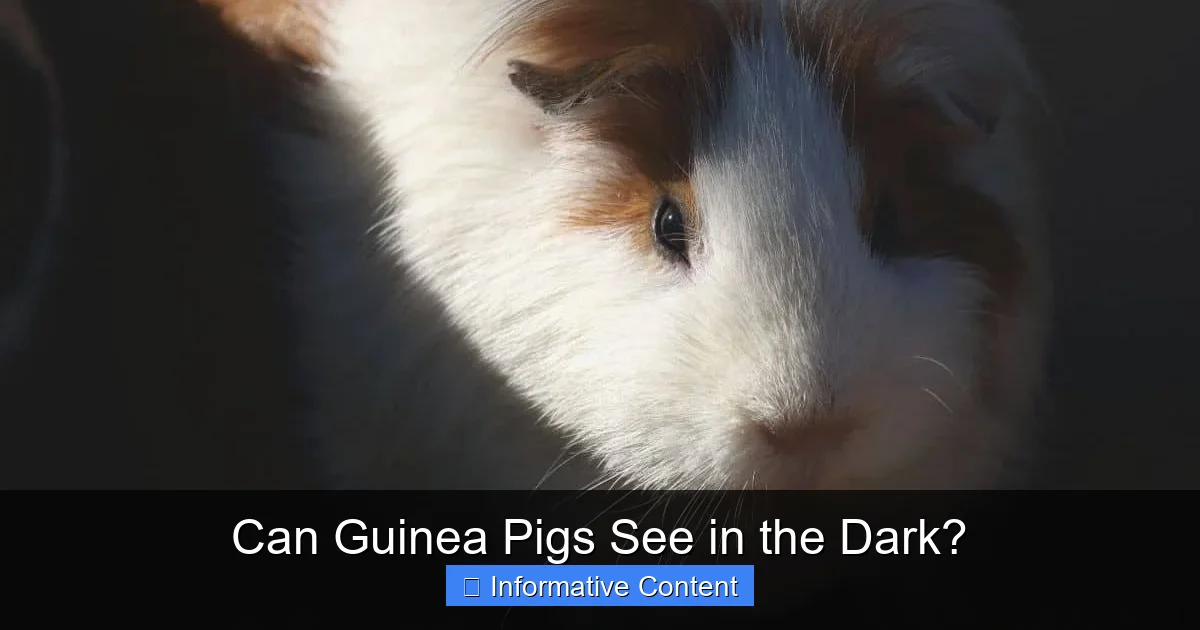
Visual guide about Can Guinea Pigs See in the Dark?
Image source: guineapig101.com
Now, let’s get to the heart of the matter: can guinea pigs see in the dark? The straightforward answer is that they can see *better* in low light than humans, but they cannot see in complete, pitch-black darkness. They fall somewhere in between being fully nocturnal (like owls or bats) and fully diurnal (like us).
Crepuscular Nature
Guinea pigs are considered “crepuscular” animals. This means they are most active during the twilight hours of dawn and dusk. These are the times when the light is dim but not entirely absent. Why? For a prey animal, these hours offer a strategic advantage. It’s light enough for them to navigate and find food, but dark enough to provide some cover from many daytime predators, and before most nocturnal predators are fully out and about. Their crepuscular nature perfectly aligns with their visual capabilities – making the most of those dim conditions.
Adaptations for Low Light
Their eyes have several features that help them in low-light environments:
- Large Eyes: Guinea pigs have relatively large eyes for their head size. Larger eyes can gather more light, which is crucial when light is scarce.
- Rod-Dominant Retina: As mentioned, their retinas are packed with rods. These photoreceptor cells are highly sensitive to light, allowing them to detect even faint illumination and subtle movements.
- Pupil Dilation: Their pupils can dilate quite widely in dim light, allowing even more available light to enter the eye and reach the retina.
These adaptations allow them to make out shapes, movement, and general outlines of their surroundings when there’s a small amount of ambient light, like moonlight filtering through a window, or even the faint glow from a digital clock.
Limitations of Their Night Sight
It’s important to differentiate between “low-light vision” and “true night vision.” True night vision implies seeing clearly in what appears as complete darkness to humans. Guinea pigs cannot do this. If you put a guinea pig in a room with absolutely no light source, they would be as blind as you or me, perhaps even more disoriented due to their reliance on other senses for navigation.
Their vision in low light is also not particularly sharp or detailed. They see a world of shapes and shadows, prioritizing motion detection over crisp images. So, while they can avoid bumping into furniture, they won’t be reading a book or distinguishing individual blades of grass in the dark.
Beyond Sight: Other Senses in the Dark
Since their low-light vision has its limits, how do guinea pigs manage to navigate and thrive when it gets truly dark or when their vision isn’t enough? The answer lies in their other highly developed senses, which work together as a powerful sensory array.
Superb Hearing
Guinea pigs have an incredible sense of hearing. Their large, mobile ears can pick up a wide range of frequencies, including sounds far beyond what humans can detect. This acuity allows them to hear approaching predators long before they see them, even in complete darkness. They can pinpoint the direction of a sound with impressive accuracy. In a dark room, they’ll rely heavily on auditory cues to understand their environment, locate cage mates, or identify potential dangers. Rustling sounds, changes in airflow, or the creak of a floorboard are all valuable pieces of information for a guinea pig.
Incredible Sense of Smell
A guinea pig’s nose is a powerful tool. Their sense of smell is highly developed and plays a crucial role in almost every aspect of their lives, especially in low-light conditions. They use their sense of smell to:
- Find Food: Even in the dark, they can sniff out tasty hay, pellets, or hidden veggies.
- Navigate: They leave scent markers and recognize familiar smells in their environment, creating a mental “scent map” of their territory.
- Identify Others: They can recognize their cage mates, their human caregivers, and even differentiate between friend and foe based purely on scent.
- Detect Danger: The smell of a predator can send them scurrying for cover long before any visual or auditory cues are present.
Think of their nose as their primary navigation system when visibility drops. They’re constantly processing a world of odors that we can’t even begin to imagine.
Whiskers (Vibrissae) as Sensory Tools
Guinea pigs have prominent whiskers, known as vibrissae, on their faces. These aren’t just for show; they are incredibly sensitive sensory organs. Each whisker is connected to a network of nerves that send detailed information about the environment back to the brain. Their whiskers allow them to:
- Sense Obstacles: As they move, their whiskers brush against objects, helping them gauge distances and detect obstacles in their path without having to see them.
- Navigate Tight Spaces: They use their whiskers to determine if they can fit through a particular gap or tunnel.
- Explore Textures: Whiskers help them understand the texture and composition of surfaces.
In a dark environment, their whiskers become an extended sense of touch, allowing them to “feel” their way around safely and efficiently, much like a cat or a rat uses its whiskers.
Creating an Optimal Environment for Your Guinea Pig
Understanding how your guinea pig sees (or doesn’t see) in the dark allows you to create a home that caters to their natural abilities and makes them feel secure.
Importance of a Consistent Light Cycle
Just like humans, guinea pigs thrive on a consistent light-dark cycle. This helps regulate their circadian rhythm, which controls sleep patterns, hormone production, and overall health. Aim for about 12-14 hours of light during the day (natural light is best, but full-spectrum cage lights can supplement) and 10-12 hours of darkness at night. Avoid sudden, drastic changes in lighting.
Providing Safe Dark Zones
Even if they can see in low light, guinea pigs are prey animals, and they instinctually seek cover. Always provide plenty of hidey houses, tunnels, and cozy spots in their cage. These “dark zones” offer them a sense of security and a place to retreat when they feel scared or simply want to rest in peace. They will use these spaces throughout the day and night.
Avoiding Complete Darkness
While they don’t need a nightlight directly in their cage, avoiding absolute, pitch-black darkness in the room where their cage is located can be beneficial. A little ambient light, perhaps from a distant window, a dim hallway light, or even a very low-wattage nightlight in another part of the room, can help them navigate if they need to move around at night. This small amount of light can significantly reduce their stress levels and prevent accidental bumps or falls.
Nighttime Safety
Before you turn out the lights for the night, do a quick check of your guinea pig’s cage.
- Stable Setup: Ensure water bottles are securely fastened, food bowls are stable, and any ramps or shelves are not loose.
- Remove Hazards: Make sure no loose wires, sharp objects, or potentially dangerous items are accessible if your guinea pig decides to explore.
- Easy Access to Essentials: Ensure hay, water, and pellets are easily accessible without requiring complex navigation.
These simple steps ensure that even with limited vision, your guinea pig can safely access what they need throughout the night.
Understanding Guinea Pig Behavior in Low Light
Observing your guinea pig’s behavior can offer insights into how they perceive and react to different light levels.
Activity Patterns
Since they are crepuscular, you might notice your guinea pig being most active during dawn and dusk. This could mean a burst of energy in the early morning, followed by a nap during the brightest part of the day, and then another active period as evening approaches. However, guinea pigs are also known for taking many short naps throughout the day and night, rather than one long sleep cycle. Even during the night, if there’s enough ambient light, you might hear them rustling, munching on hay, or drinking water.
Signs of Discomfort or Fear
If a guinea pig is truly disoriented by darkness, they might exhibit signs of fear or anxiety. These could include:
- Freezing: Remaining perfectly still for long periods.
- Panicked Movement: Bumping into objects, running frantically, or repeatedly trying to escape their cage.
- Excessive Hiding: Refusing to leave their hidey house even when food is offered.
- Loud Squeaking: Calling out in distress.
If you observe these behaviors when it’s dark, it could be a sign that the environment is too dim for them to feel safe. Introducing a tiny bit of ambient light might help alleviate their stress.
Trust and Routine
Guinea pigs are creatures of habit and thrive on routine. A predictable daily schedule, including consistent feeding times and interaction, helps them feel secure, regardless of the lighting. If they trust their environment and their human, they will generally feel safer and more comfortable, even when it’s dim. Gently interacting with them during their active times (dawn/dusk) can strengthen your bond and help them associate you with positive experiences.
In conclusion, while your guinea pig isn’t equipped with true night vision like an owl, they are remarkably adapted to navigate and thrive in low-light conditions thanks to their crepuscular nature and a sophisticated combination of keen hearing, an excellent sense of smell, and sensitive whiskers. By understanding these fascinating adaptations and providing an environment that caters to them, you ensure your furry friend feels safe, secure, and happy, whether the lights are on or off. So, the next time you wonder if your guinea pig can see in the dark, remember they see a different kind of “dark,” one illuminated by their other incredible senses.
Frequently Asked Questions
Do guinea pigs have good eyesight in general?
Guinea pigs have decent eyesight, especially when it comes to detecting movement and perceiving a wide field of view (almost 340 degrees) due to their eyes being on the sides of their heads. However, their depth perception is not very strong, and their color vision is limited compared to humans.
Why do guinea pigs have such large eyes?
Guinea pigs have relatively large eyes for their size because larger eyes can gather more light. This adaptation is crucial for their crepuscular lifestyle, allowing them to make the most of the limited light available during dawn and dusk, and in other low-light conditions.
Should I put a nightlight near my guinea pig’s cage?
You don’t necessarily need a nightlight directly in their cage, but providing a very dim ambient light in the room, such as a low-wattage nightlight or light from a hallway, can be beneficial. It helps them feel more secure and navigate safely if they need to move around in the middle of the “night.”
Do guinea pigs use their whiskers to see?
While they don’t use their whiskers to “see” in the visual sense, their whiskers (vibrissae) are incredibly sensitive sensory organs. They help guinea pigs detect obstacles, gauge distances, and understand their immediate environment through touch, especially useful in dim or dark conditions where vision is limited.
How does a guinea pig’s vision compare to a human’s?
A guinea pig’s vision is adapted for survival as a prey animal, emphasizing motion detection and wide peripheral view in low light, with limited color perception and depth perception. Human vision is designed for sharp detail, strong depth perception, and a wide range of color detection in brighter light, with significantly poorer low-light performance.
Can bright lights harm my guinea pig’s eyes?
Extremely bright, direct, or sudden lights can be uncomfortable or even stressful for guinea pigs, whose eyes are more sensitive to light due to their rod-dominant retinas. It’s best to avoid harsh, sudden lighting changes and provide a consistent, moderate light cycle to keep them comfortable.